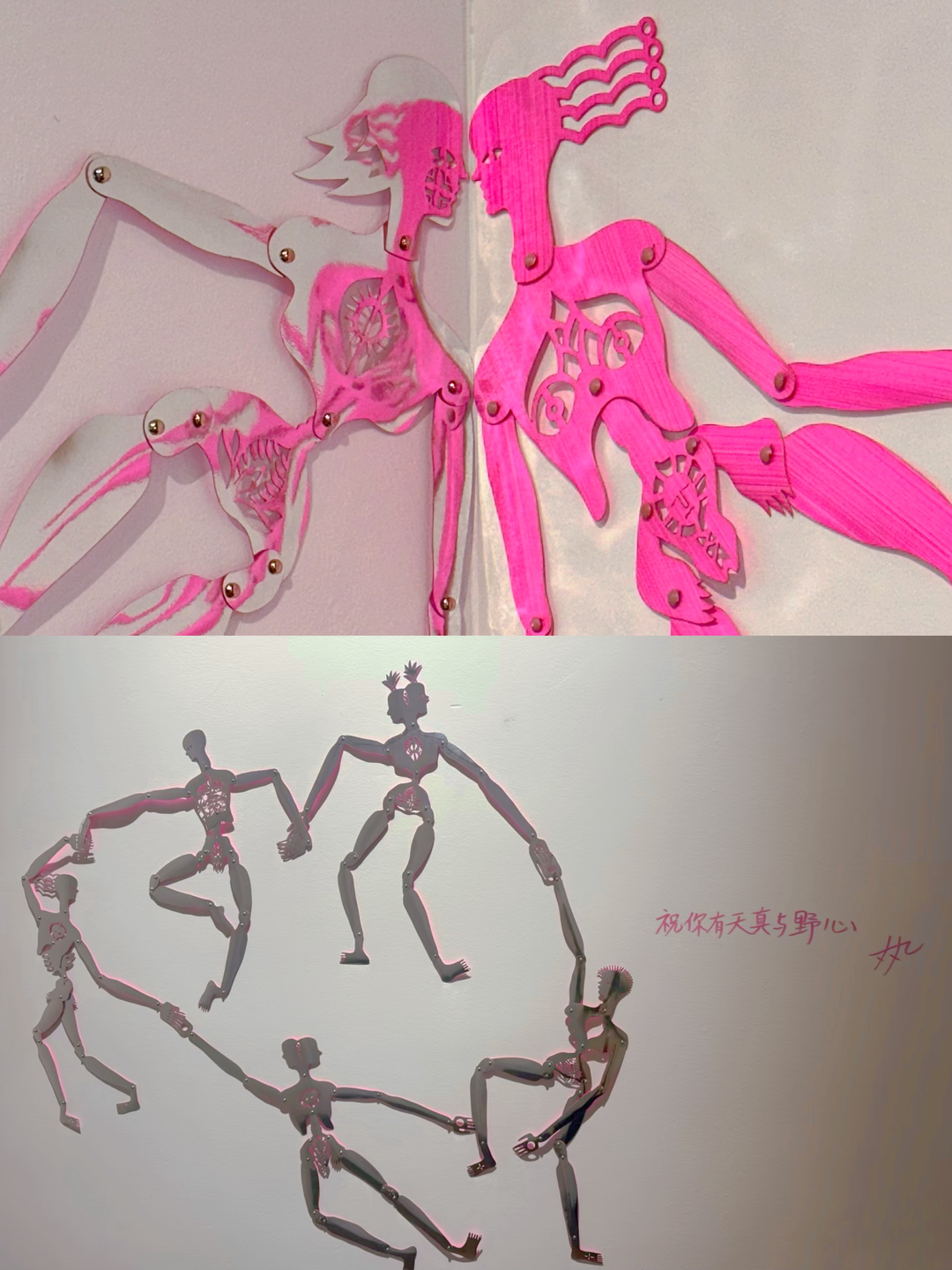
“纸页出走” 陈粉丸个展
The Paper That Walked Out
Chen Fenwan Solo Exhibition
24 Jan 2026 - 6 Apr 2026
Eslite Spectrum, Suzhou, China | Solo Exhibition
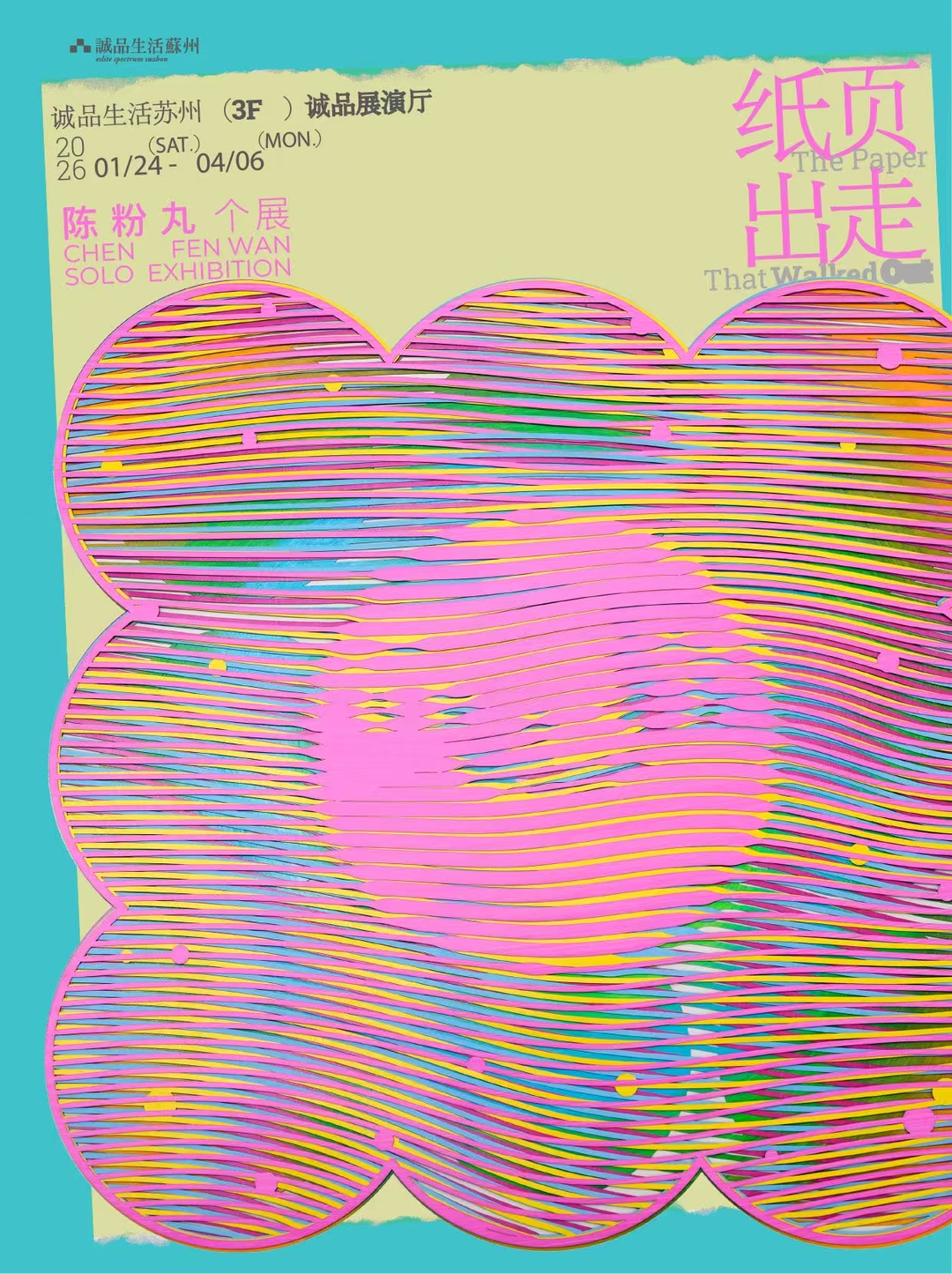
2026年1月24日,艺术家陈粉丸的全新个人展览“纸页出走”在诚品生活苏州顺利开幕。
展览标题“纸页出走”的灵感来源于易卜生的话剧《玩偶之家》:如同出走的娜拉,陈粉丸刀刃下的纸张打破传统,带着荧光色的锋芒,既叛逆又浪漫。同时,“纸页出走”也象征着粉丸自身艺术实践的转向,“纸”挣脱了她早期创作的手工书的桎梏,从承载信息的底层材料,转变为装置中、画布上的视觉主体。
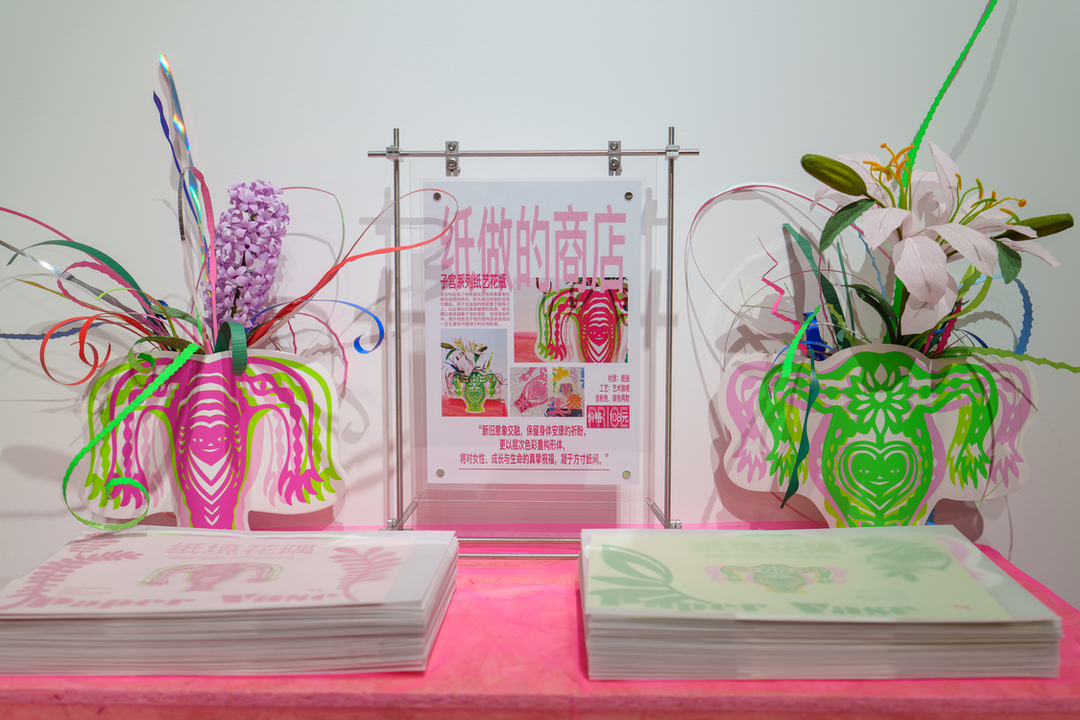
不同于以往体量较大的个展,本次展览以克制的规模呈现,聚焦于小体量的剪纸拼贴与装置作品,同时带来新作品《iPad剪纸系列》《子宫系列》及新内容颜色系统。粉丸剪纸的完整创作流程被转化为观展路径,起稿、上色、对折、剪刻、展开及拼组,各个篇章串联成清晰脉络。观众得以遵循这一线索,进入作品生成的内部结构,如同走入艺术家的工作台与思考现场。此外,她的个人成长史——在艺术教育中形成的复数意识、对手工与技术关系的理解,以及早期创作手工书用过的工具与方法,则构成了一条“暗线”,埋藏于展览的结构之中,与“创作流程”的明线形成对照与呼应。
On January 24, 2026, artist Chen Fenwan opened her new solo exhibition The Paper That Walked Out at Eslite Spectrum Suzhou.
The exhibition title draws inspiration from Henrik Ibsen’s A Doll’s House. Like Nora walking out the door, the paper under Chen Fenwan’s cutter breaks from tradition, carrying the sharp glow of fluorescent color — rebellious yet romantic. At the same time, “The Paper That Walked Out” signals a turning point in the artist’s own practice: “paper” has slipped free from the bound structure of her early artist’s books, transforming from a substrate that carries information into a visual protagonist across installations and canvases.
Unlike her previous large-scale solo exhibitions, it adopts a more restrained scale, focusing on smaller papercutting collages and installation works, while introducing new bodies of work, including The iPad Papercutting Series, Uterus Series, and a newly developed color system. Fenwan’s complete papercutting workflow has been translated into the exhibition’s viewing path — drafting, coloring, folding, cutting, unfolding, and collaging & assembling — forming a clear structural thread. Visitors follow this sequence into the internal logic of how works come into being, as though stepping into the artist’s worktable and site of thought.
Running quietly beneath this visible process is another narrative line: the artist’s personal development — her pluralistic mindset shaped through art education, her evolving understanding of the relationship between handicraft and technology, and the tools and methods from her early artist’s book practice. This “hidden thread” lies embedded in the exhibition structure, echoing and counterbalancing the more explicit storyline of making.
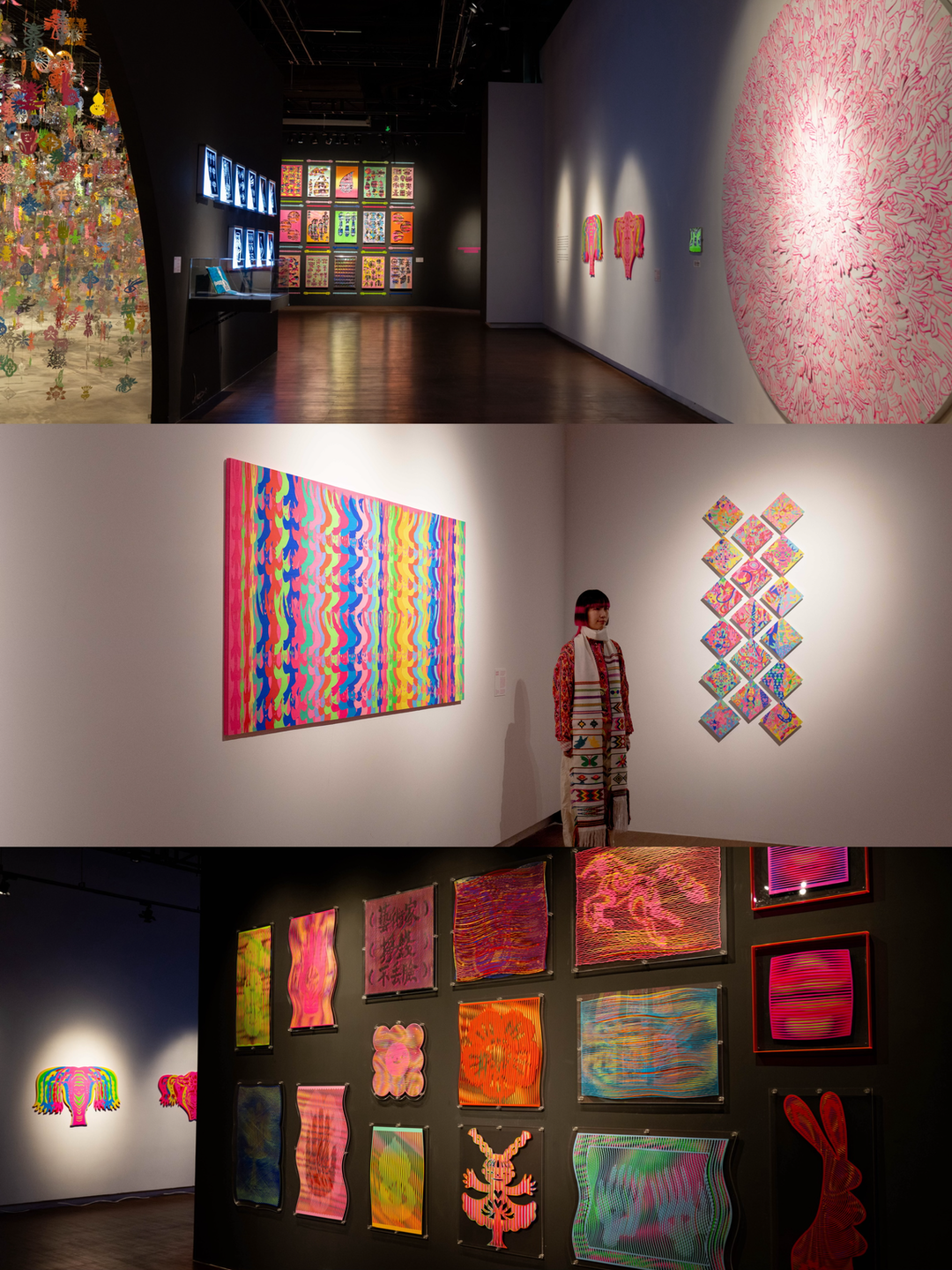
点击收看粉丸的布展Vlog
Click to watch Fenwan’s exhibition install vlog
01 起稿
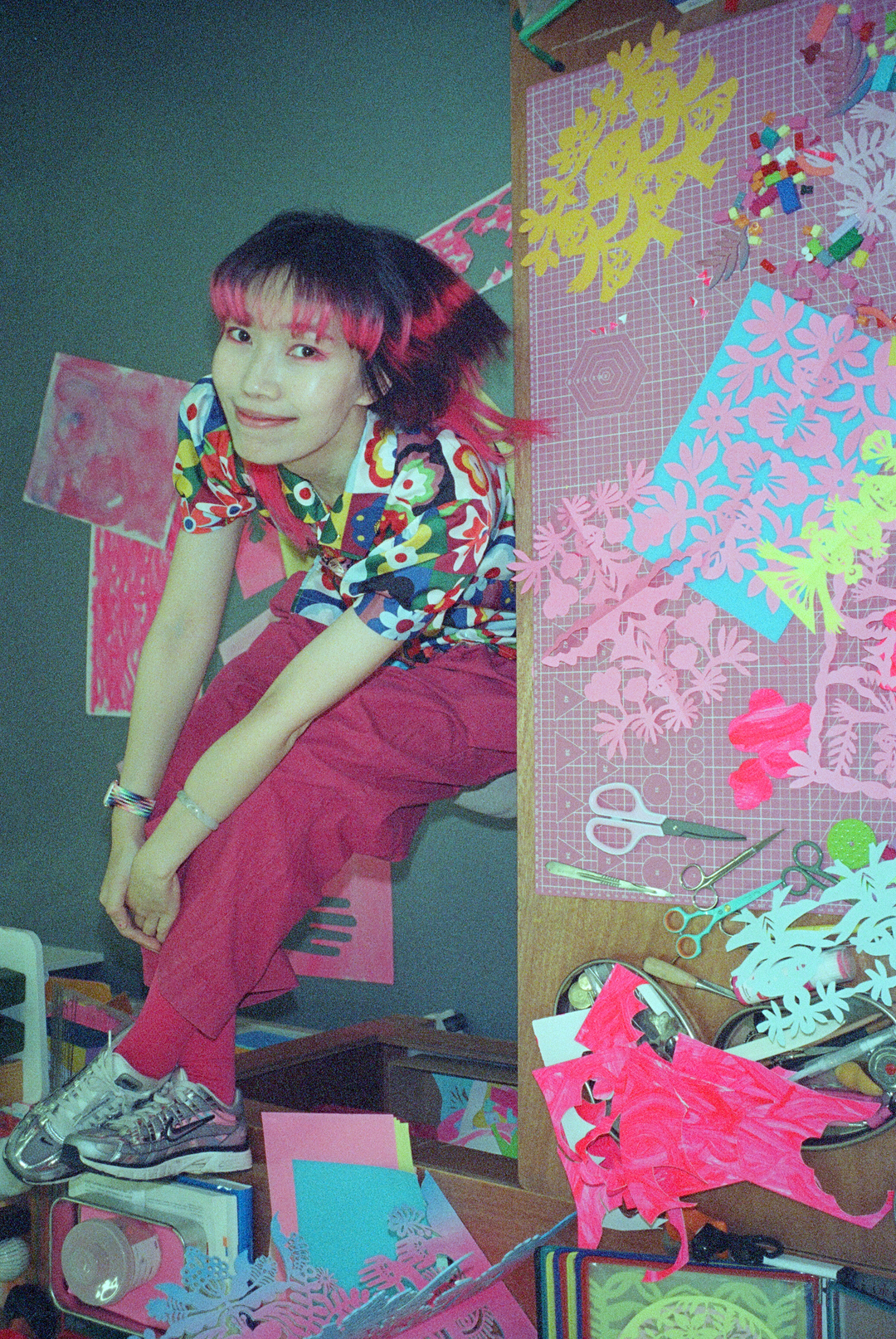
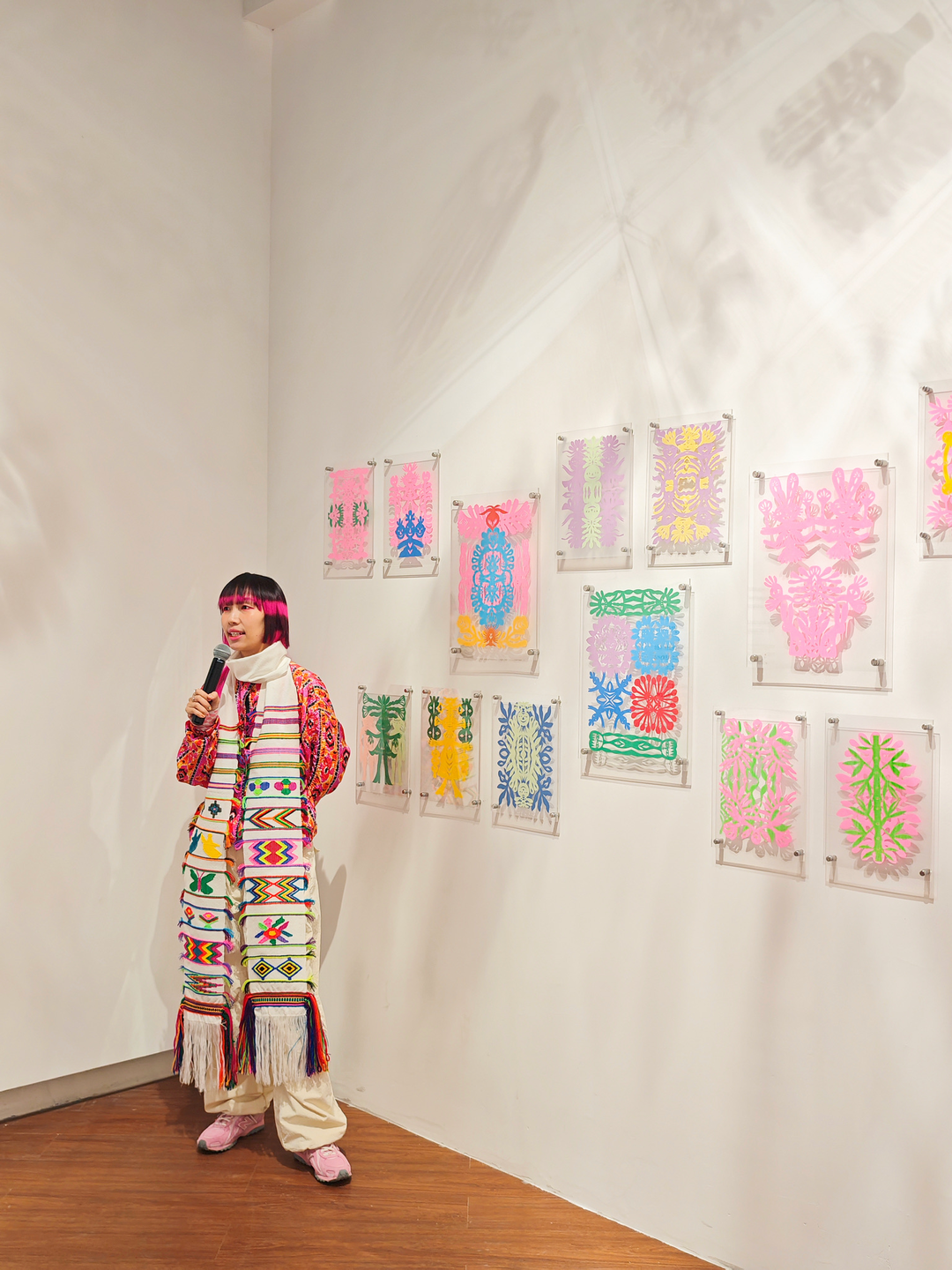
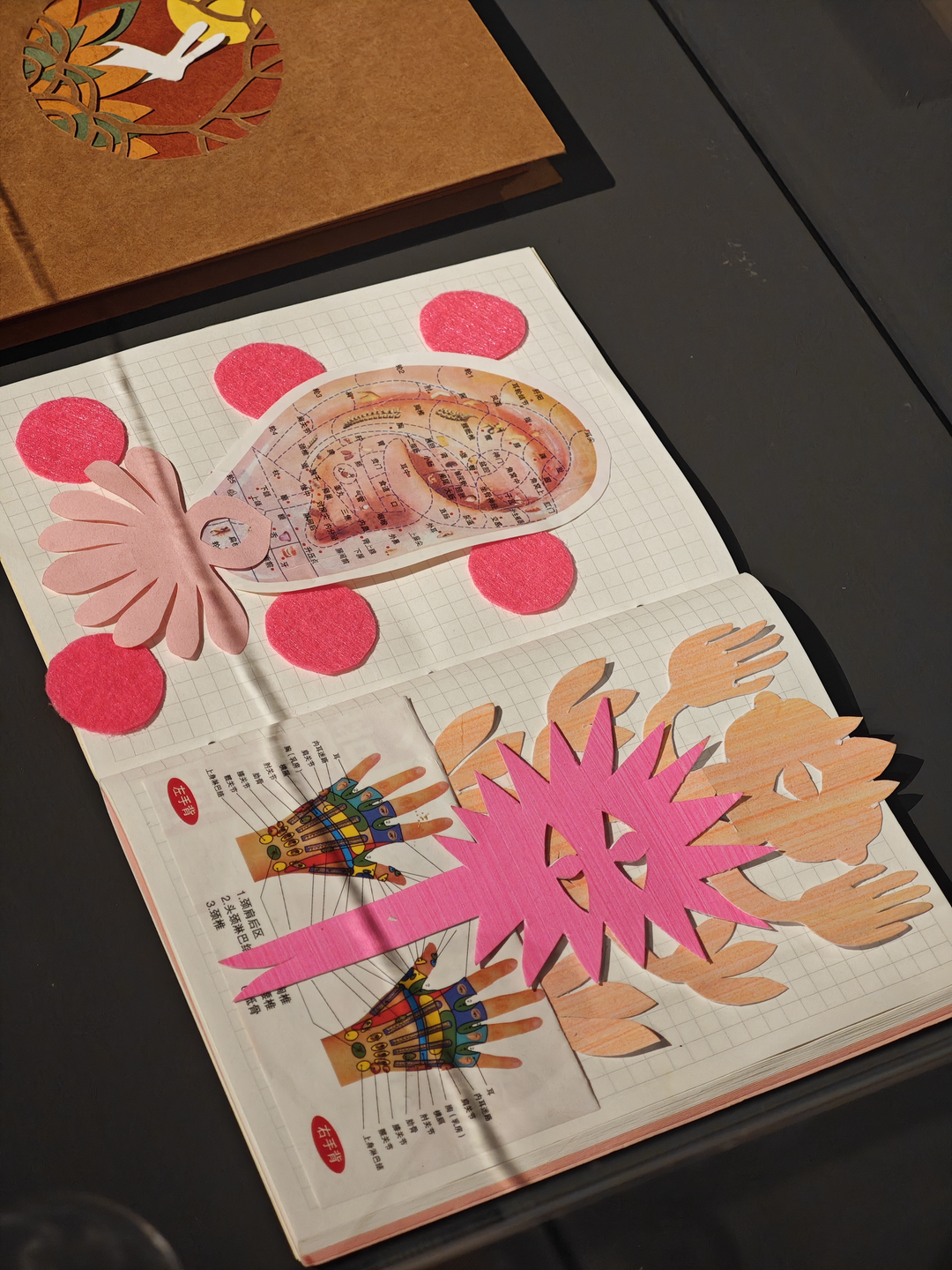
“起稿”是剪纸的基础,图样的构思决定了下刀的方向与节奏,没有形,便无从剪刻。传统民间剪纸往往依托图腾、祖先或生殖崇拜等母题展开,承载祈福功能。陈粉丸则不执着于传统吉祥纹样,她的灵感源自个人的生活经验与日常观察,从更直接的创作冲动出发,发展出鲜活荧光的、独具一格的视觉语法。
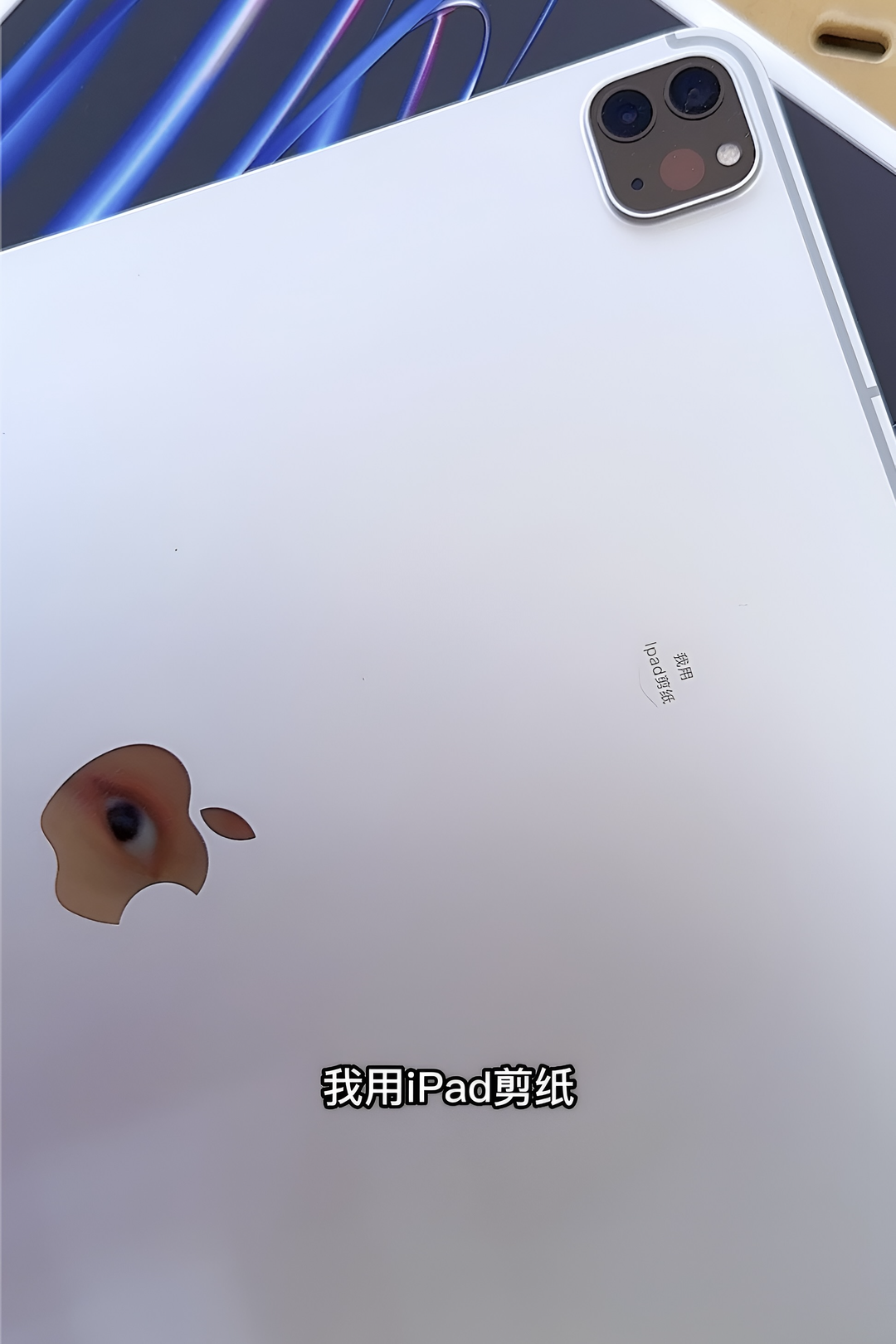
她同时使用两种方式起稿:一是手起刀落、直觉先行的手工剪纸;二是使用iPad手绘矢量图形,再结合数控雕刻机械完成切割。新技术的引入拓宽了剪纸的边界,这既是对传统技艺的回应,也是对其在当代文化中延展性的实验。这种游离于传统风格之外的探索,也让她得以她得以触及更广泛的艺术议题。
“起稿”板块呈现的正是以上两种方式创作的习作与原稿。它们并非完成意义上的作品,却构成了后续正式作品与空间装置的视觉基础。剪纸的“起稿”也呼应着陈粉丸早期创作手工书时,需先制作结构性的“样书”的创作逻辑。这种跨媒介的共性指向了同一种工作方法:在正式完成脑海中构思的作品面貌之前,创作者需要经历的起稿、推敲与试验。
01 Drafting
Drafting is the foundation of papercutting. The appearance of the motif determines the direction and rhythm of the blade; without form, there is nothing to cut. Traditional papercutting often draws upon totems, ancestral symbols, or fertility motifs, carrying auspicious meanings. Chen Fenwan, however, does not adhere to established decorative symbolism. Her cutouts grow from personal experience and everyday observation, propelled by direct creative impulse, developing into a vivid, fluorescent visual language uniquely her own.
She works through two methods: intuitive freehand cutting, where the blade follows instinct, and vector graphics created on an iPad, later cut using a laser cutting machine. The introduction of new technologies expands the boundaries of papercutting — both a response to tradition and an experiment in its contemporary elasticity. The exploration beyond conventional stylistic expectations allows her to engage broader artistic discussions.
The “Drafting” section presents cutout drafts and scripts through the two methods mentioned above. They are not finished works in the full sense, yet they form the visual foundation for the subsequent completed pieces and spatial installations. The drafting process in papercutting also echoes Chen Fenwan’s early practice of making artists’ books, which required the prior production of structural “dummy books.” The shared logic across different media points to a consistent working method: before realizing the envisioned form of a work, the artist must pass through stages of drafting, refinement, and experimentation.
02 上色
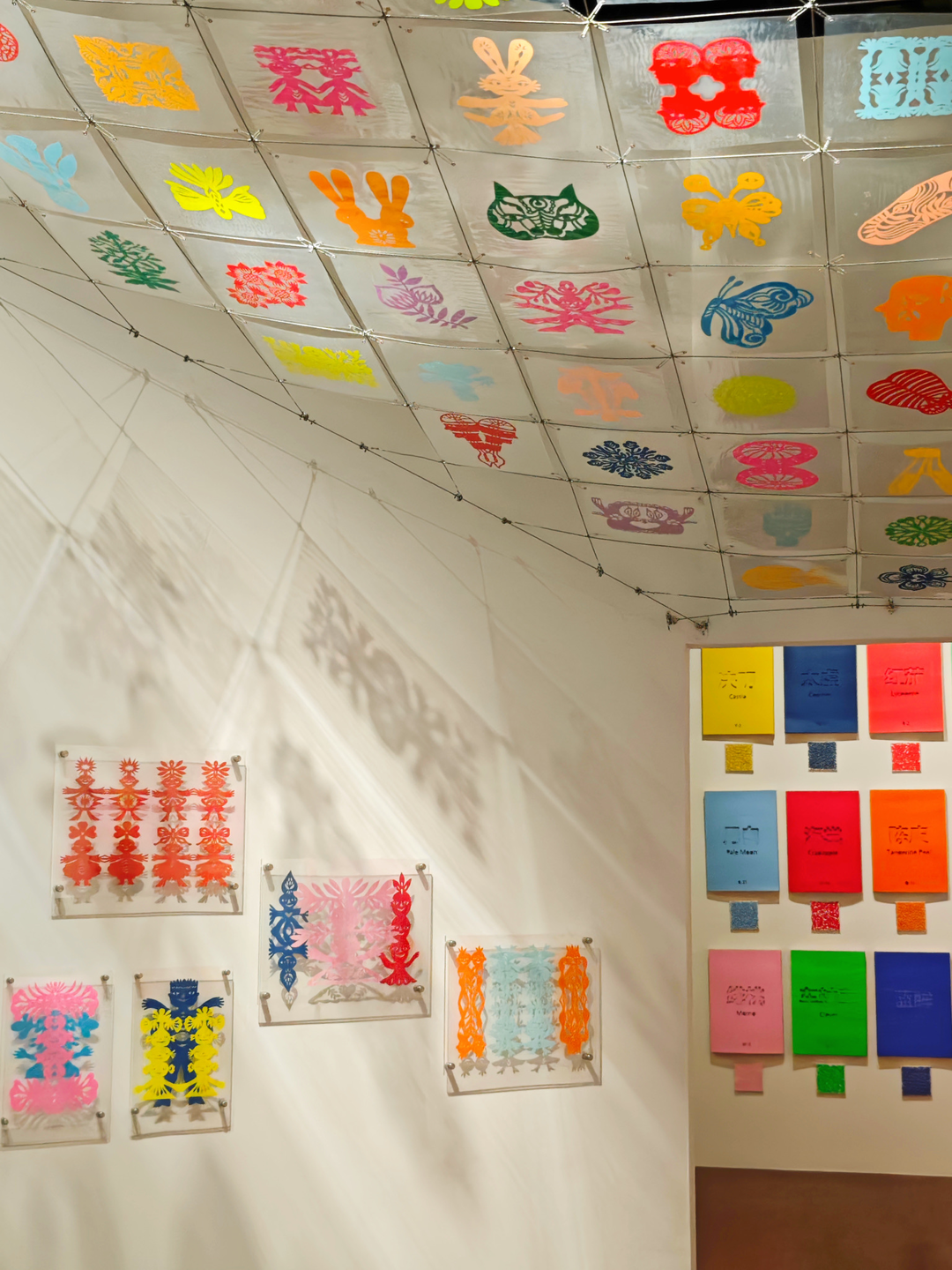
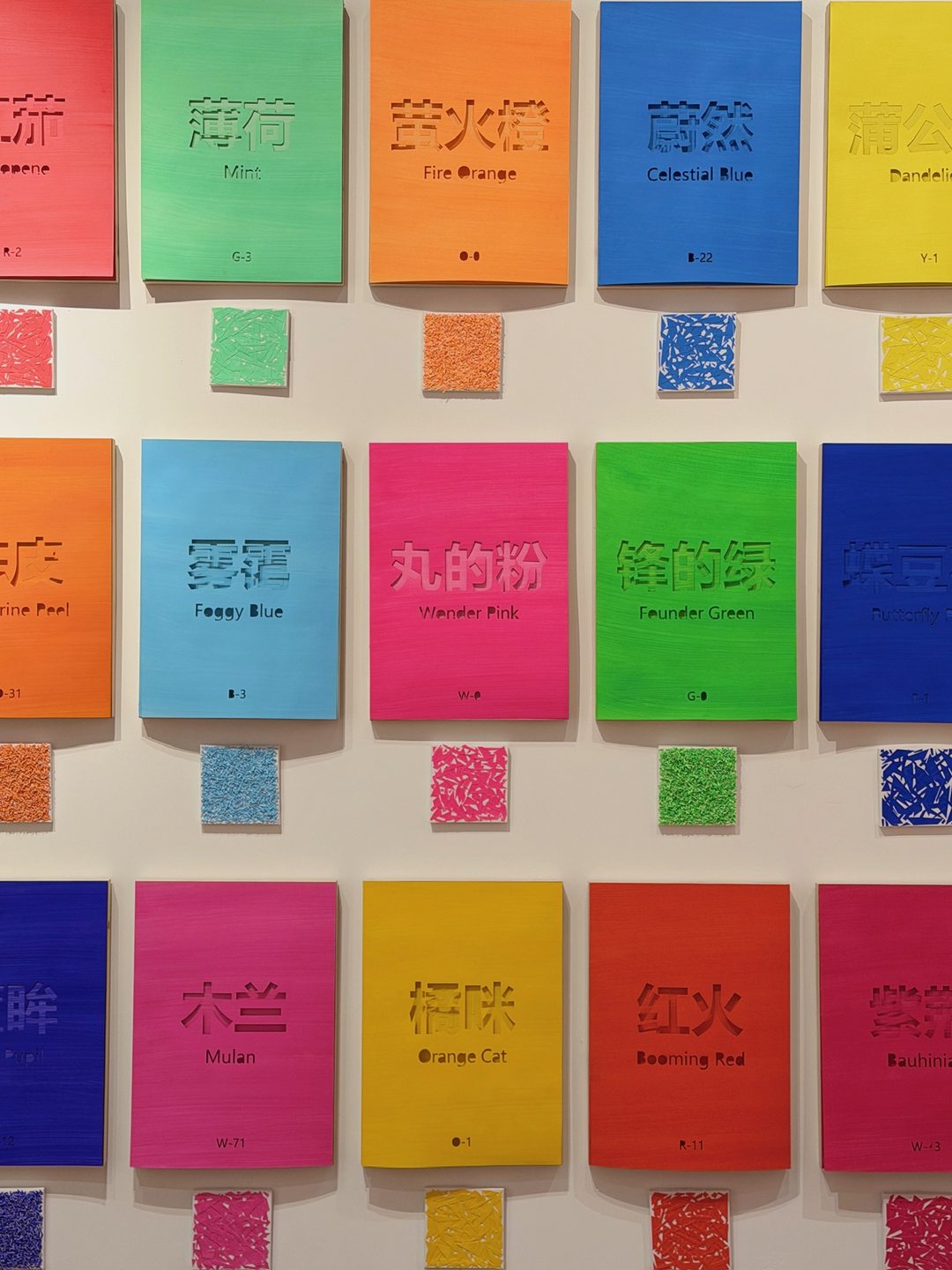
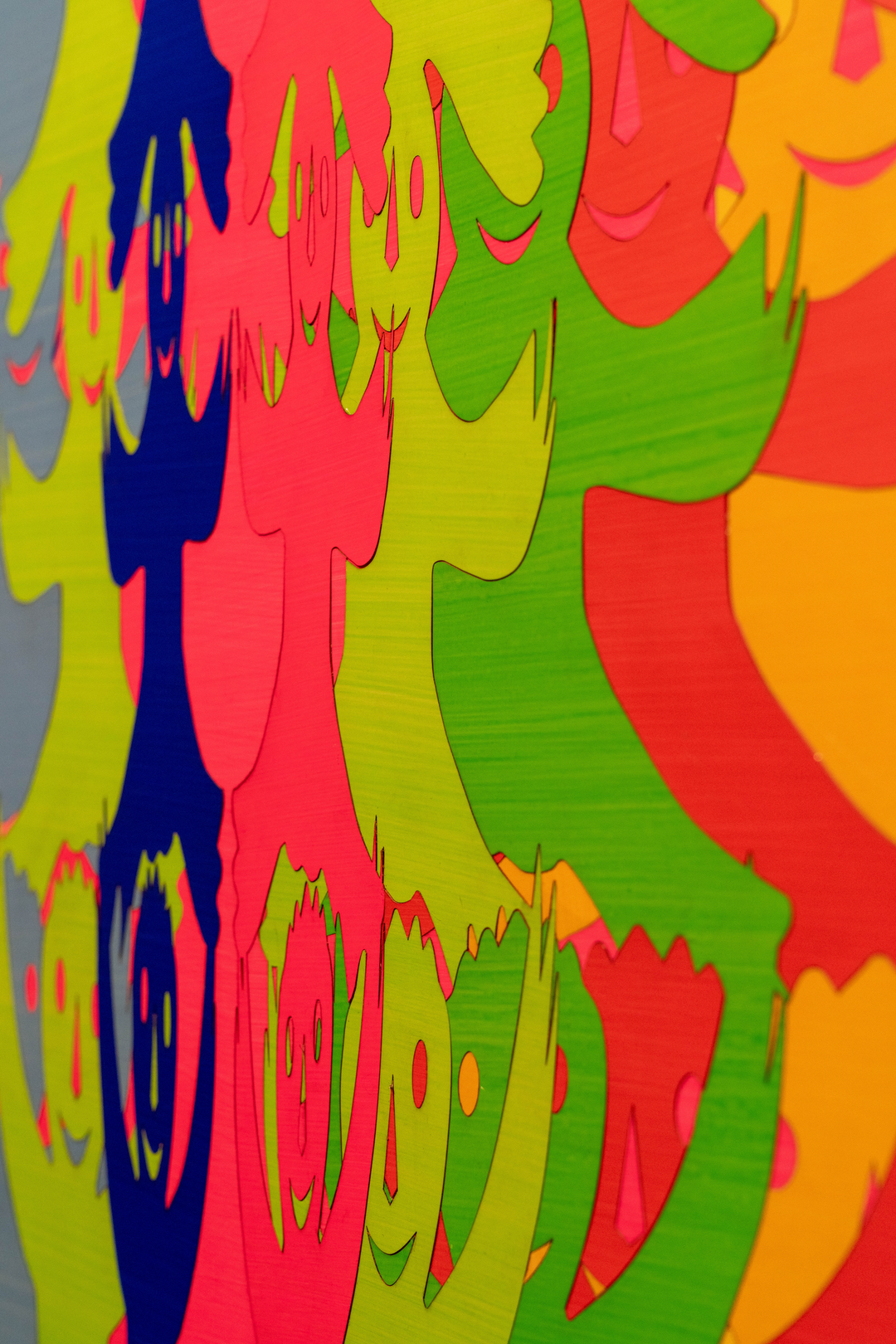
不同于直接剪裁彩色纸张,陈粉丸的绝大多数作品,都以颜料层层刷涂于白纸之上,待其干透再进行剪刻。工业荧光颜料与手工调色的介入,让纸面上的色彩既具有高度饱和的视觉张力,又保留着刷痕、厚薄不均的肌理质感,成为可被触摸与感知的物质存在。
鲜亮高对比的色彩,是陈粉丸剪纸艺术最直观的个人风格,也与大众印象里的红色窗花形成区分。她希望作品先以抓人眼球的霓虹色调给予观众感官愉悦,建立浅层联结,再通过叙事内核激发深层共鸣。在她眼中,色彩是一种沟通语言,它会随着作品材质、空间光线与具体语境产生变化,并在重复使用与迭代中,不断丰富这门语言的词汇与语法。
粉丸曾因粉色承载的乖顺意味与固化的性别期待,刻意回避这种颜色。直至2016年创作手工书《平面》时,她拆分、重组大量人脸面孔的照片并提取色彩,才意识到粉色本是人类皮肤透出来的底色。这个发现让她重新认识粉色,并开始“报复性”地运用它。随着创作的推进,粉色也跳出了最初柔和的皮肤粉,逐渐转向荧光的质感、变得锋利又尖锐。起初,她用粉色修正偏见;如今,她在更广阔的色谱里剪纸,将粉色与其他高饱和色彩并列。这份不可忽视、近乎“入侵”的存在感,恰似艺术之于日常生活的那份突兀与错位。
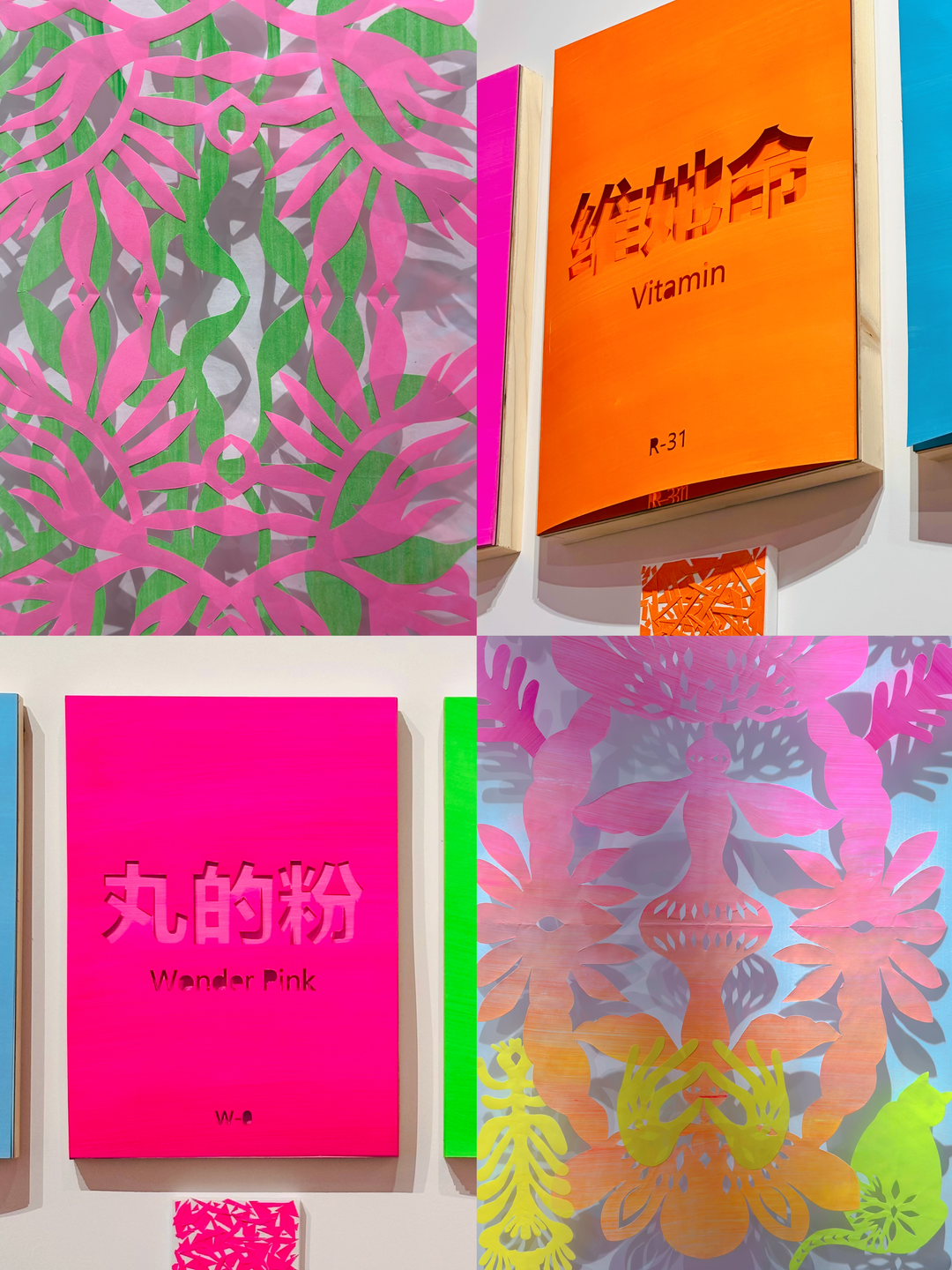
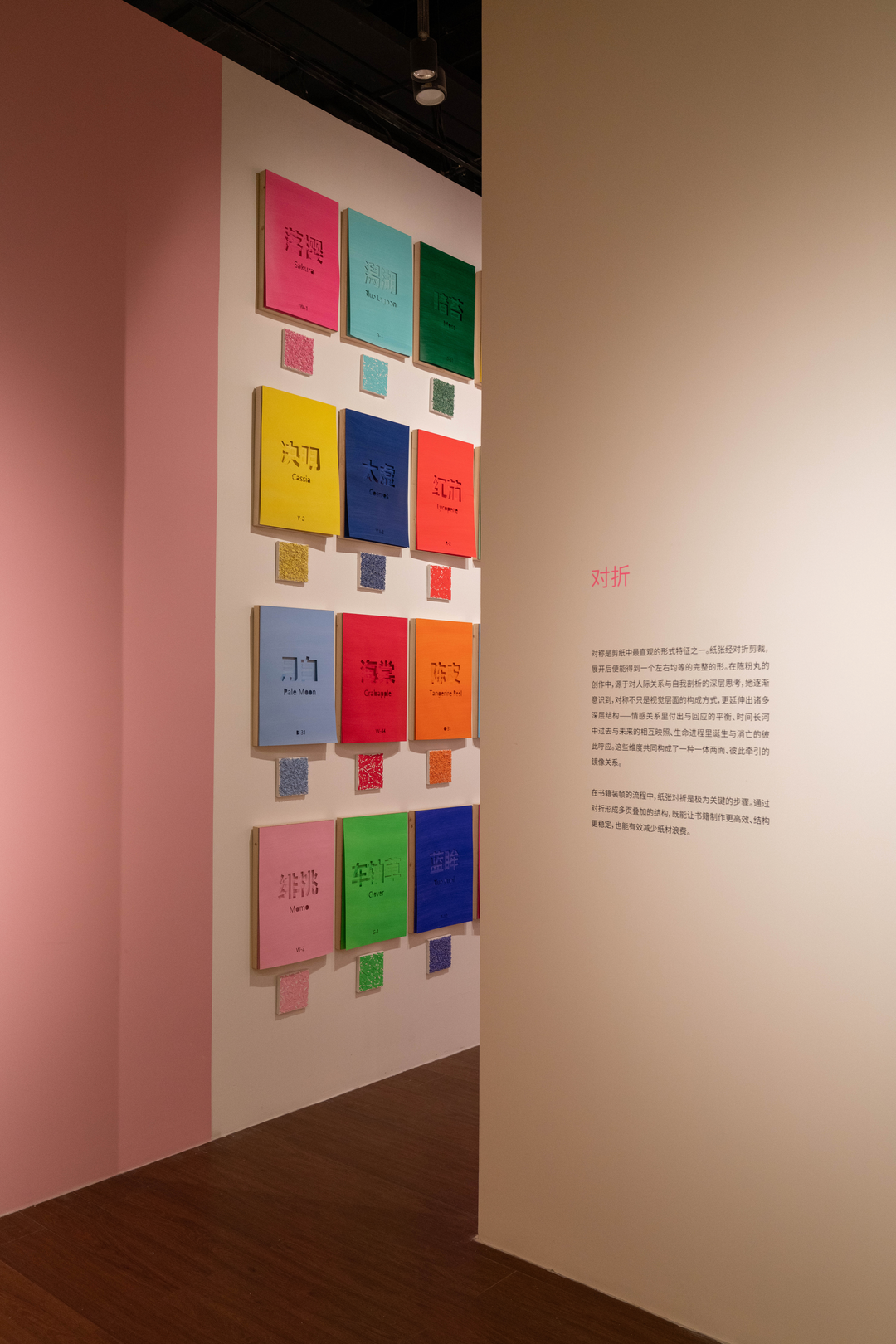
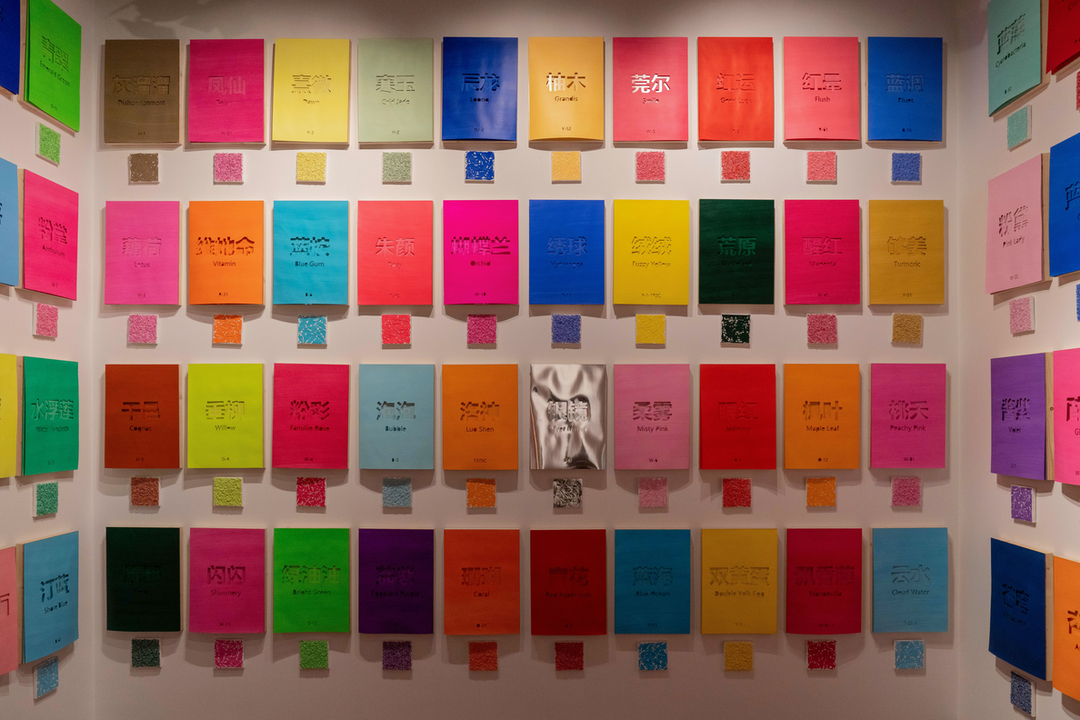
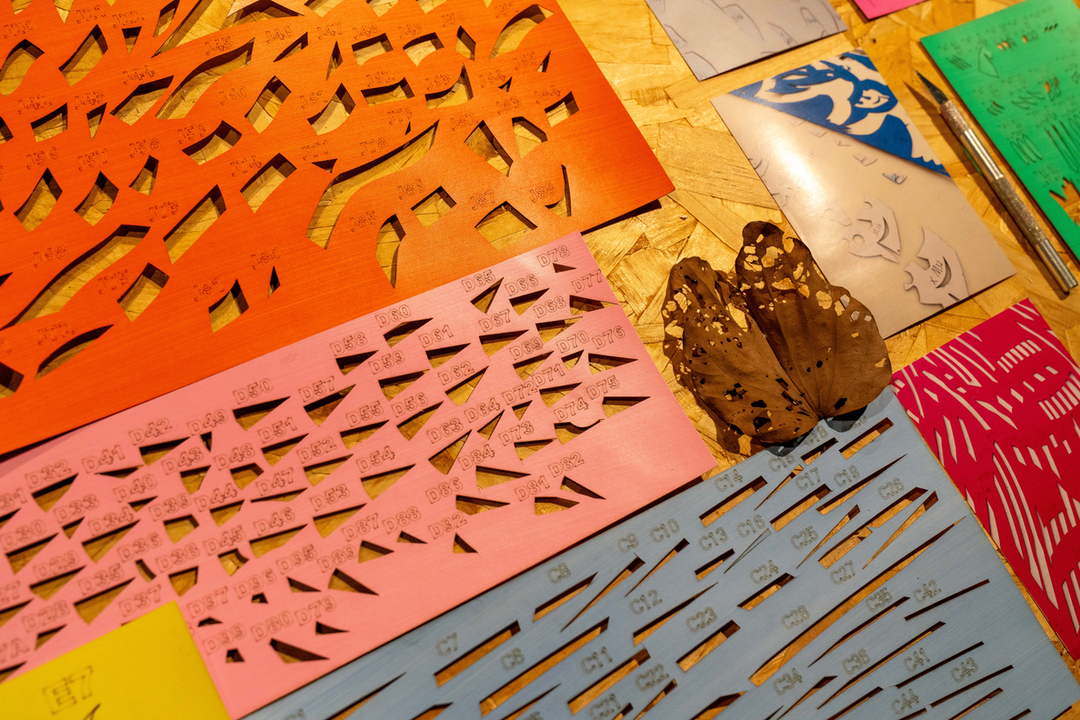
此次展览展示了陈粉丸工作室逐步建立的色卡系统。墙面陈列的一百种颜色,共同组合成一份完备的色彩档案,每一种颜色都有其独特的命名与编号。这套色彩标准的形成,不仅记录了她从单一颜色出发、持续拓展配色系统的创作轨迹,也指向其工作方式的转型:从美院毕业初期单打独斗的个体实践,逐步走向工作室团队协作与规模化产出的成熟阶段。
02 Coloring
Compared to cutting directly from colored paper, Chen Fenwan typically paints layers of pigment onto white sheets before cutting. Industrial fluorescent paints and hand-mixed tones create visual tension through high saturation while preserving visible brushstrokes and uneven textures, turning color into a tangible material presence.
Bright, highly saturated color is one of the most distinctive features of her pieces, distinguishing them from the red palette commonly associated with traditional Chinese window papercuts. She aims to capture the viewer’s eye with striking neon tones, offering sensory pleasure and establishing an initial connection, before its narrative core evokes a deeper resonance. In her view, color is a language of communication. It shifts in response to material, spatial lighting, and specific contexts, and through repetition and iteration, continuously expands its own vocabulary and grammar.
Fenwan once deliberately avoided pink because of its connotations of docility and the fixed gender expectations attached to it. It was not until 2016, while creating the artist’s book Flat Surface, that she deconstructed and recomposed numerous photographic portraits, extracting their colors, and realized that pink is the undertone of human skin. The discovery reshaped her understanding of pink and led her to use it in retaliation. As her art practice evolved, pink moved beyond its initial soft, flesh-like hue toward fluorescent intensities—becoming sharper, more acute. In the beginning, she used pink to correct prejudice; now, she works across a broader spectrum, placing pink alongside other highly saturated colors. Its undeniable, nearly invasive presence mirrors the way art interrupts and unsettles the routines of everyday life.
03 对折
对称是剪纸中最直观的形式特征之一。纸张经对折剪裁,展开后便能得到一个左右均等的完整的形。在陈粉丸的创作中,源于对人际关系与自我剖析的深层思考,她逐渐意识到,对称不只是视觉层面的构成方式,更延伸出诸多深层结构——情感关系里付出与回应的平衡、时间长河中过去与未来的相互映照、生命进程里诞生与消亡的彼此呼应。这些维度共同构成了一种一体两面、彼此牵引的镜像关系。
在书籍装帧的流程中,纸张对折是极为关键的步骤。通过对折形成多页叠加的结构,既能让书籍制作更高效、结构更稳定,也能有效减少纸材浪费。
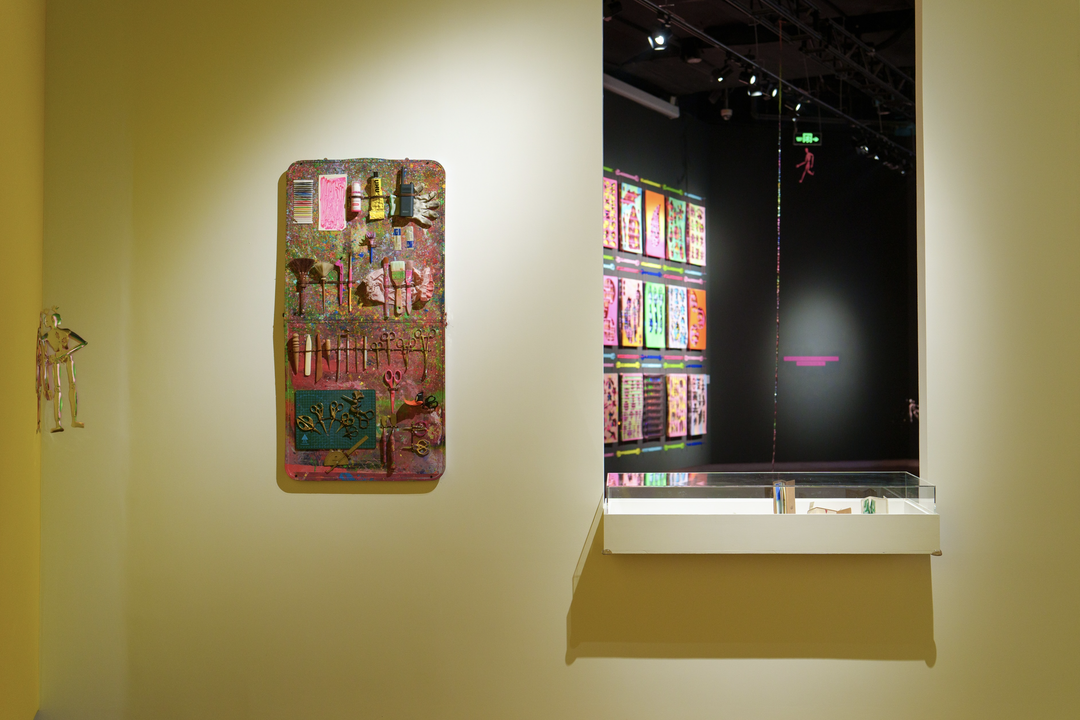
墙面还展示了部分粉丸创作手工书和剪纸的常用工具,趁手的它们是粉丸手工创作中最默契的搭档。
03 Folding
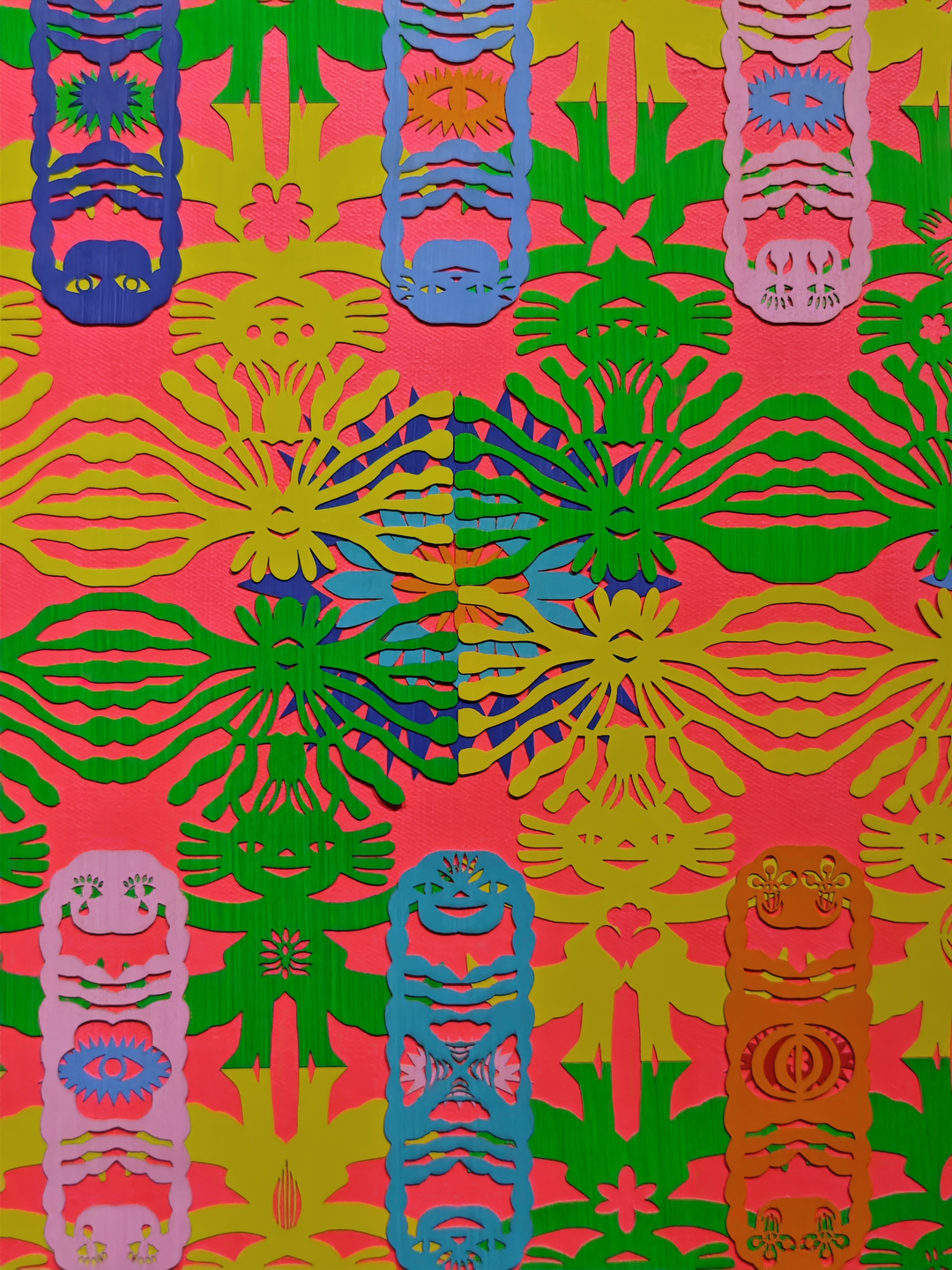
Symmetry is among papercutting’s most direct visual traits. A folded paper, once cut and reopened, reveals a balanced shape. In Fenwan’s practice, symmetry extends beyond composition into deeper structural reflections — the balance of giving and receiving in relationships, the mirroring of past and future, and the echo between birth and disappearance in the cycle of life. Together, these form a reflected, interdependent structure.
By folding the paper to create layered signatures, the structure becomes more efficient to produce, more stable in form, and more with less wasted paper materials.
Displayed along the wall are several of the tools Fenwan frequently uses in making an artist’s book and papercuts. Well-worn and familiar in her hands, they are her most trusted companions in the act of creating.
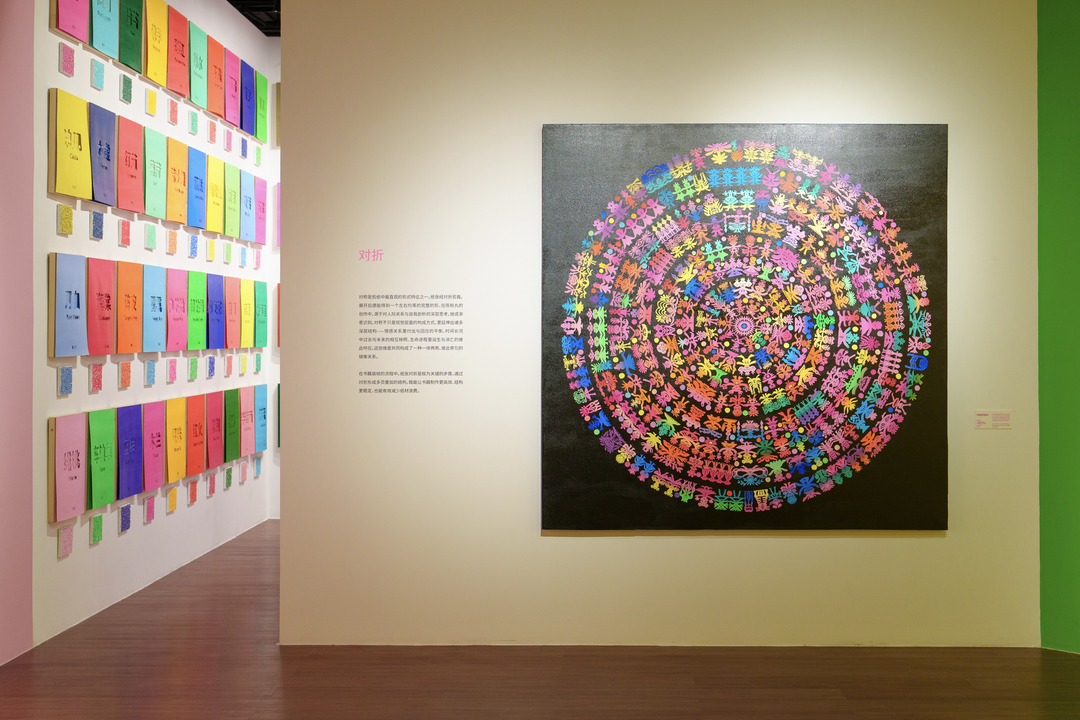
《10倍的快乐》,架上剪贴,2022
Tenfold Hapiness, collage on canvas, 2022
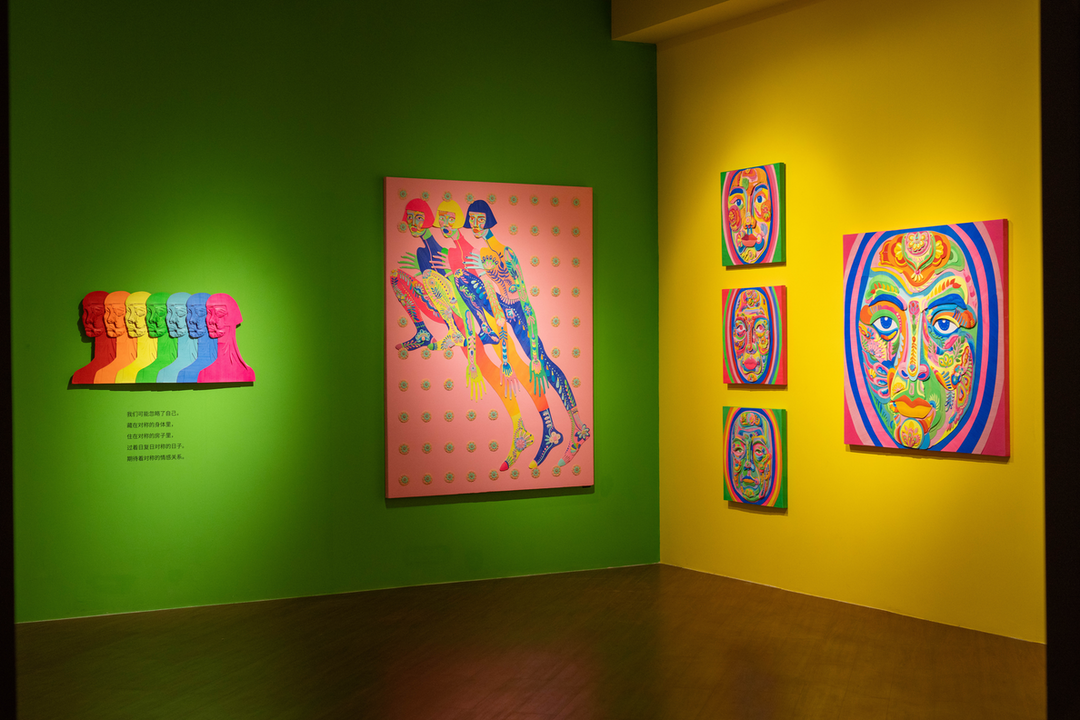
《对称系列》,架上剪贴,2022-2024
Symmetry Series, collage on canvas, 2022-2024
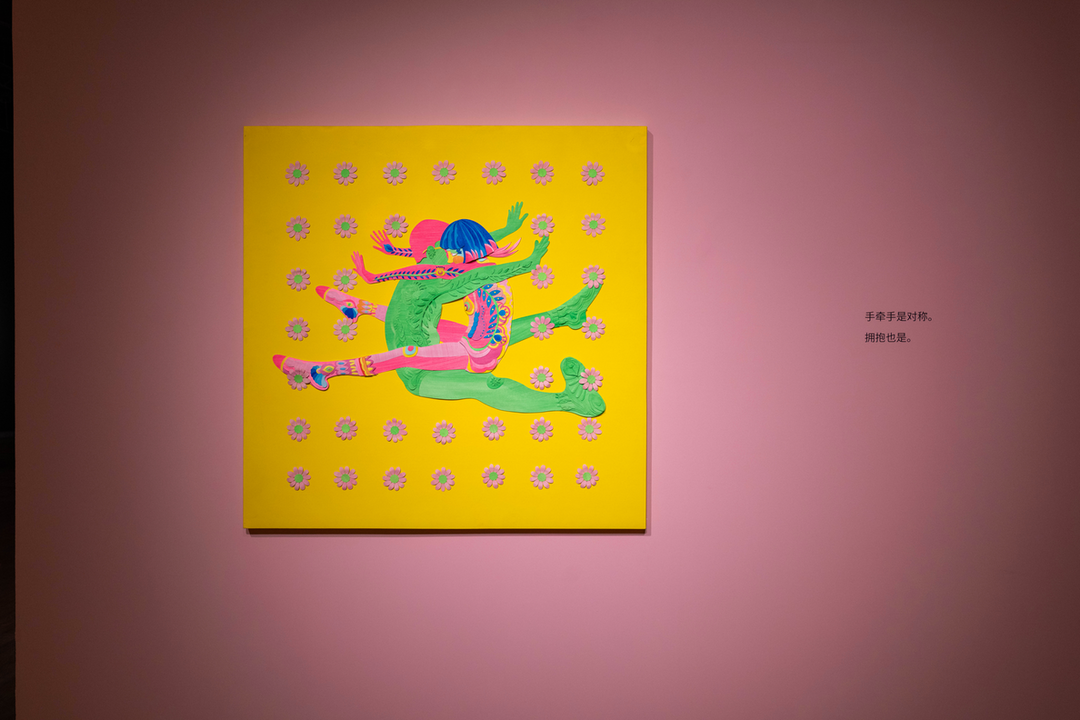
《对称是我拥抱你》,架上剪贴,2022
Symmetry is Me Hugging You, collage on canvas, 2022
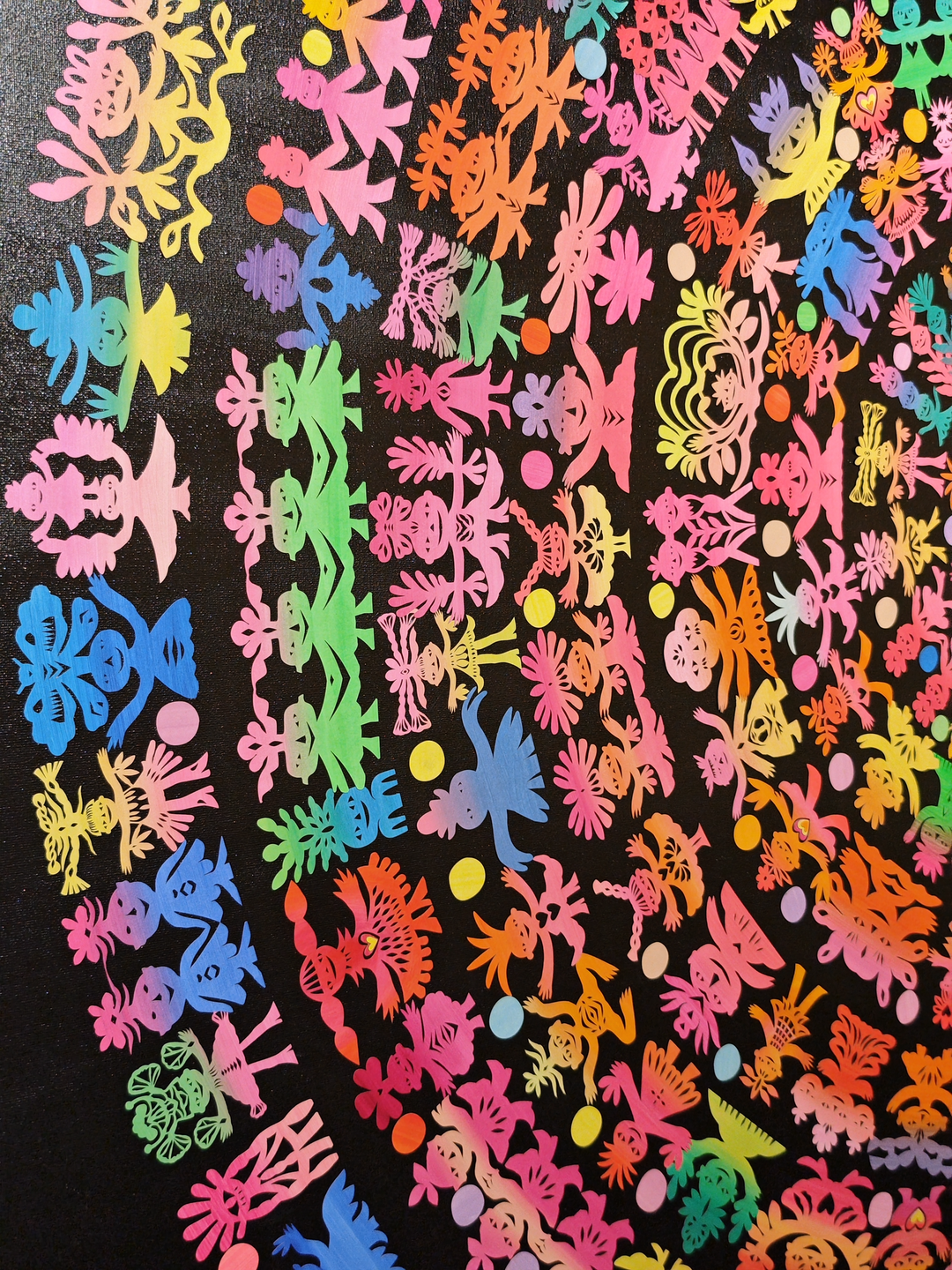
《10倍的快乐》局部
Tenfold Hapiness (partial)
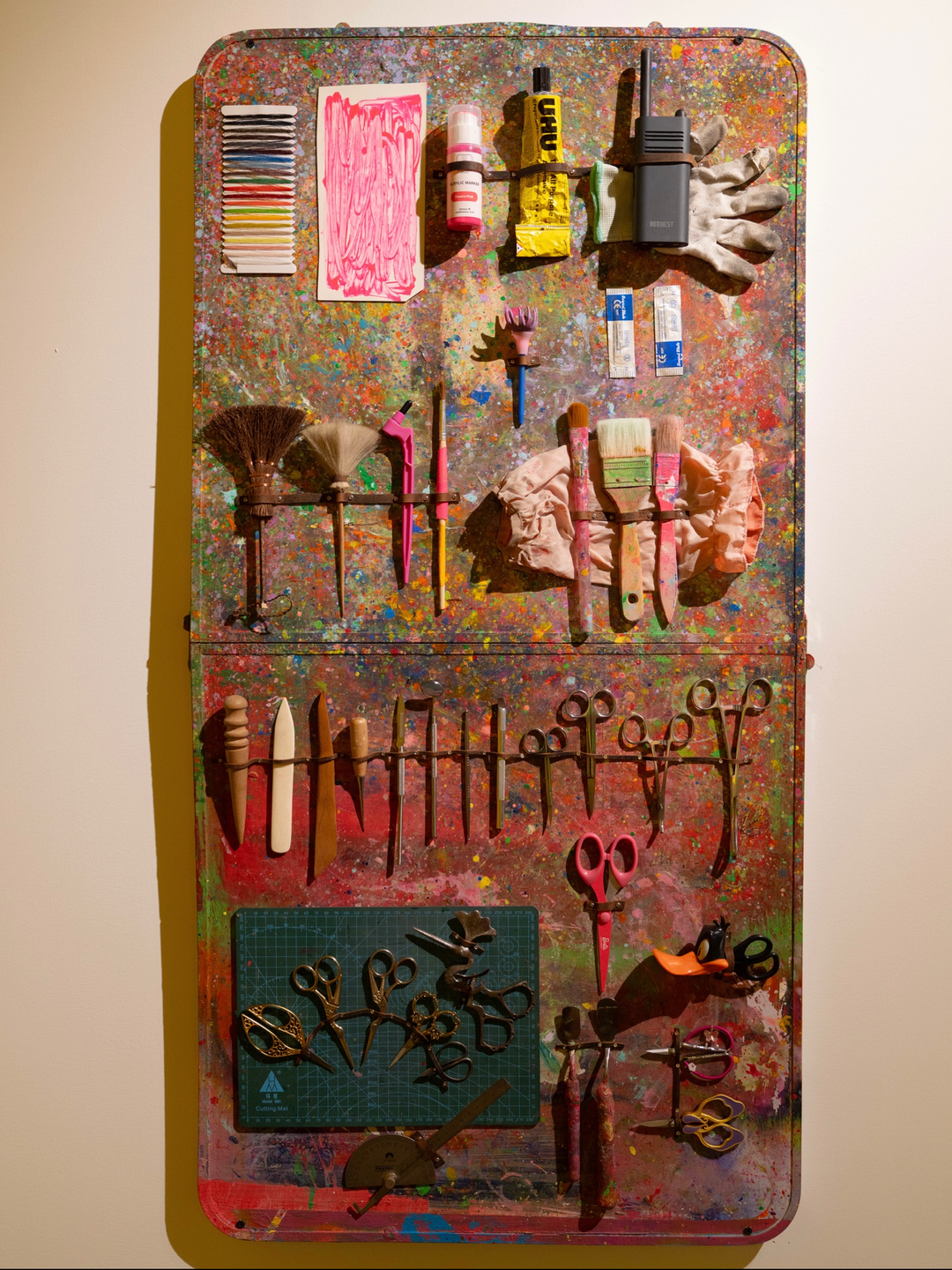
工具桌
Tools Desk
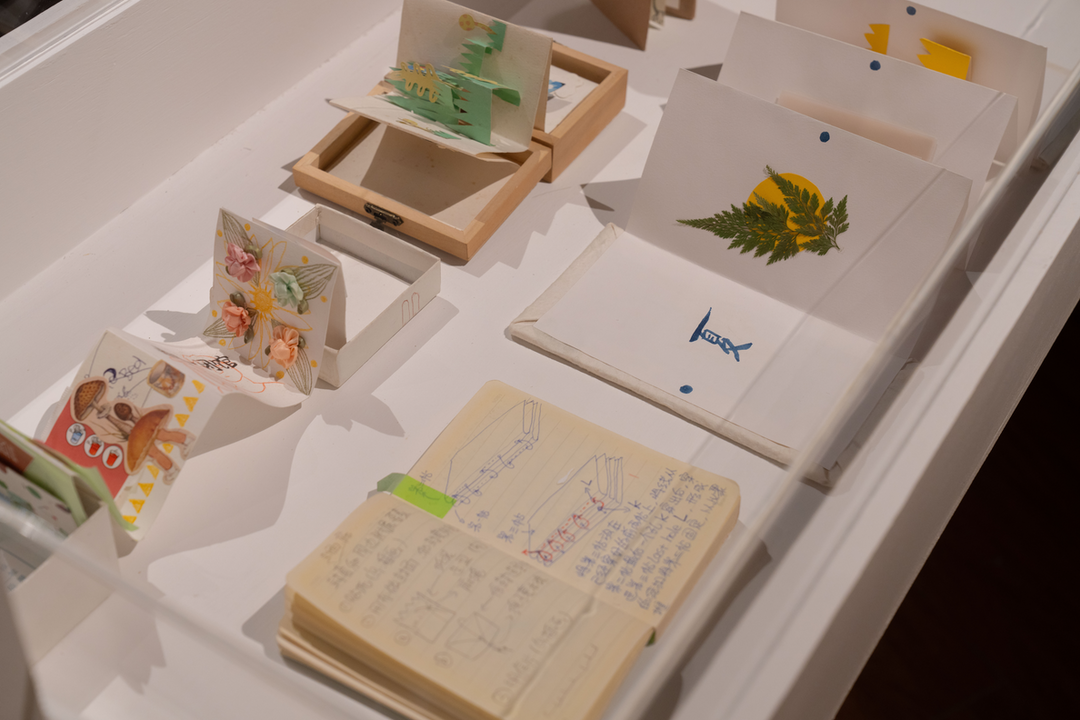
《艺术家书》,综合材料,2012-至今
Artist’s Books, mixed medium, 2012-ongoing
04 对折
在正式开始剪刻前,对图形的正负形的想象至关重要。剪纸是镂空间的取舍,是一种媒介哲学——它需要创作者在“剪去”和“留下”之间,做出关于形的构思与权衡。手起刀落,既是创造,也有舍弃。剪纸中的“阴阳正负形”超越了镂空这一单纯的形式感,其背后蕴含的古老东方阴阳观念,不仅是陈粉丸创作的核心思考,更贯穿了《剪纸宇宙》系列作品的理念与实践。
在陈粉丸的创作中,剪纸的正负形关系早已跳出了形式层面的装饰性。被剪除的冗余与留存的图形彼此依存、如同阴与阳般相互嵌套。这种关系不仅存在于图形之中,更延伸至她对人、环境与世界的理解:人类与宇宙的关系恰似剪纸的正负形,我们能感知到的“呼吸“”体温“”身体的边界“是”正形“;而空气、温度、他人的存在,便是常被忽略却实际塑造着我们的“负形”。人类并非封闭、孤立的存在,而是始终嵌于环境、他者与不可见的结构之中。
传统剪纸通常被理解为一种具象的视觉符号,有着固定的形态与意义。陈粉丸的创作更注重剪纸技艺背后的哲学思考,而非追求符号化的再现。她结合现代技术和当代观念,力图打破这些对符号的固化认知,让剪纸成为一种轻盈、简洁、能自由表达的媒介。“剪刻”的动作并不局限于剪刀这一具体工具,也不局限于二维平面纸张。其余能够制造空缺、形成对比与留白的方式,都是剪刻的延伸,如刀刻、激光雕刻、烧蚀、模切,或是通过透明与网状结构呈现可见的“空”。陈粉丸真正关注的,是剪纸所蕴含的减法逻辑与结构思维。当这一方法被带入更广阔的材料与语境中,剪纸不再只是传统技艺,更成为一种可以持续被探索与转译的艺术语言。
04 Cutting
Before cutting begins, the visualization of the relationship between positive and negative shapes is essential. Papercutting is a philosophy of subtraction — a negotiation between keep and throw away. Each motion of the blade creates while it discards. The yin-yang dynamics embedded in positive and negative shapes transcend mere hollowing; they carry an ancient cosmological view that underpins Chen Fenwan’s long-term thinking and the conceptual framework of The Universe of Paper Cutting series.
In her works, the relationship between positive and negative shapes has long moved beyond decorative formalism. What is lost and what remains exist in mutual dependence, interlocking like yin and yang. The dynamic extends beyond the figure itself into her broader understanding of human existence and the world: the relationship between humanity and the universe resembles the positive and negative shapes of a papercut. What we perceive—our breath, body temperature, the boundaries of our skin—constitutes the “positive shapes”; air, ambient warmth, and the presence of others are the often-overlooked “negative shapes” that nonetheless form us. Human beings are not closed, isolated entities, but are always embedded within the environment, others, and invisible structures.
The traditional papercutting is often regarded as an idiographic visual symbol with fixed form and meanings. Chen Fenwan, however, is less concerned with symbolic representation than with the philosophical thinking embedded within the technique itself. By integrating digital technologies and contemporary concepts, she seeks to unsettle rigid perceptions of such symbols and to reposition papercutting as a light, concise, and freely expressive medium. The act of “cutting” is not confined to scissors, nor to the two-dimensional plane of paper. Any means that creates absence, contrast, or spatial openness extends the logic of cutting—whether through carving, laser engraving, burning, die-cutting, or the use of transparency and mesh structures to render visible voids. What ultimately interests her is the subtractive logic and structural thinking inherent in papercutting. When applied across diverse materials and contexts, papercutting ceases to be merely a traditional craft and becomes an artistic language capable of continuous exploration and translation.
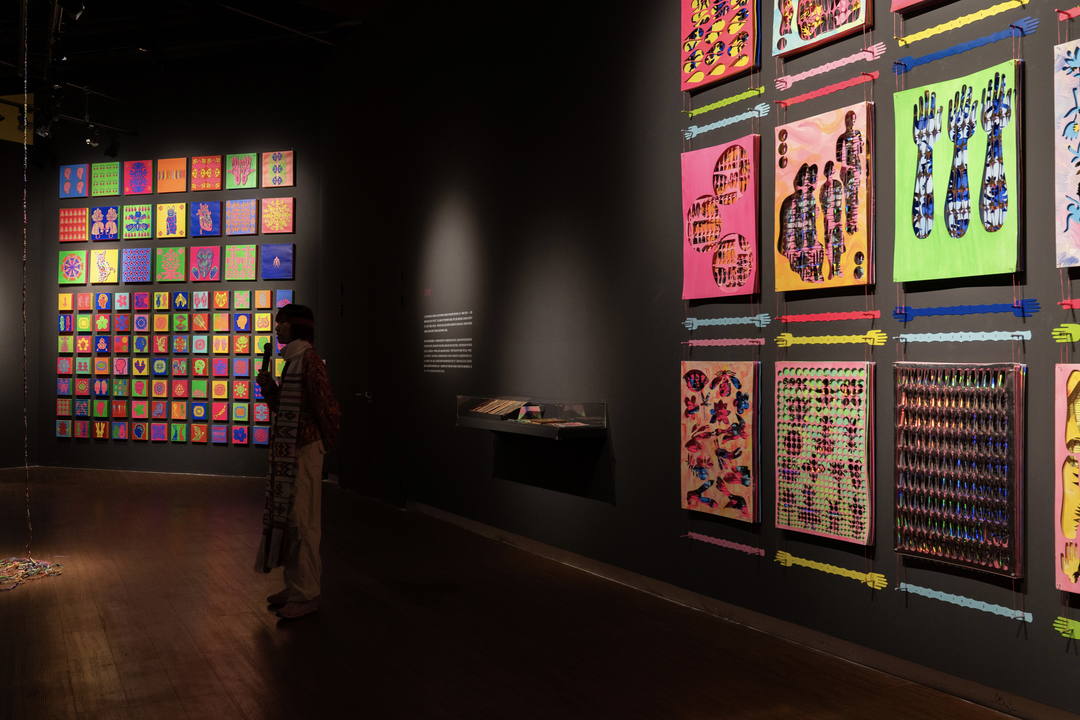
《剪纸宇宙-正形》
《剪纸宇宙-负形》
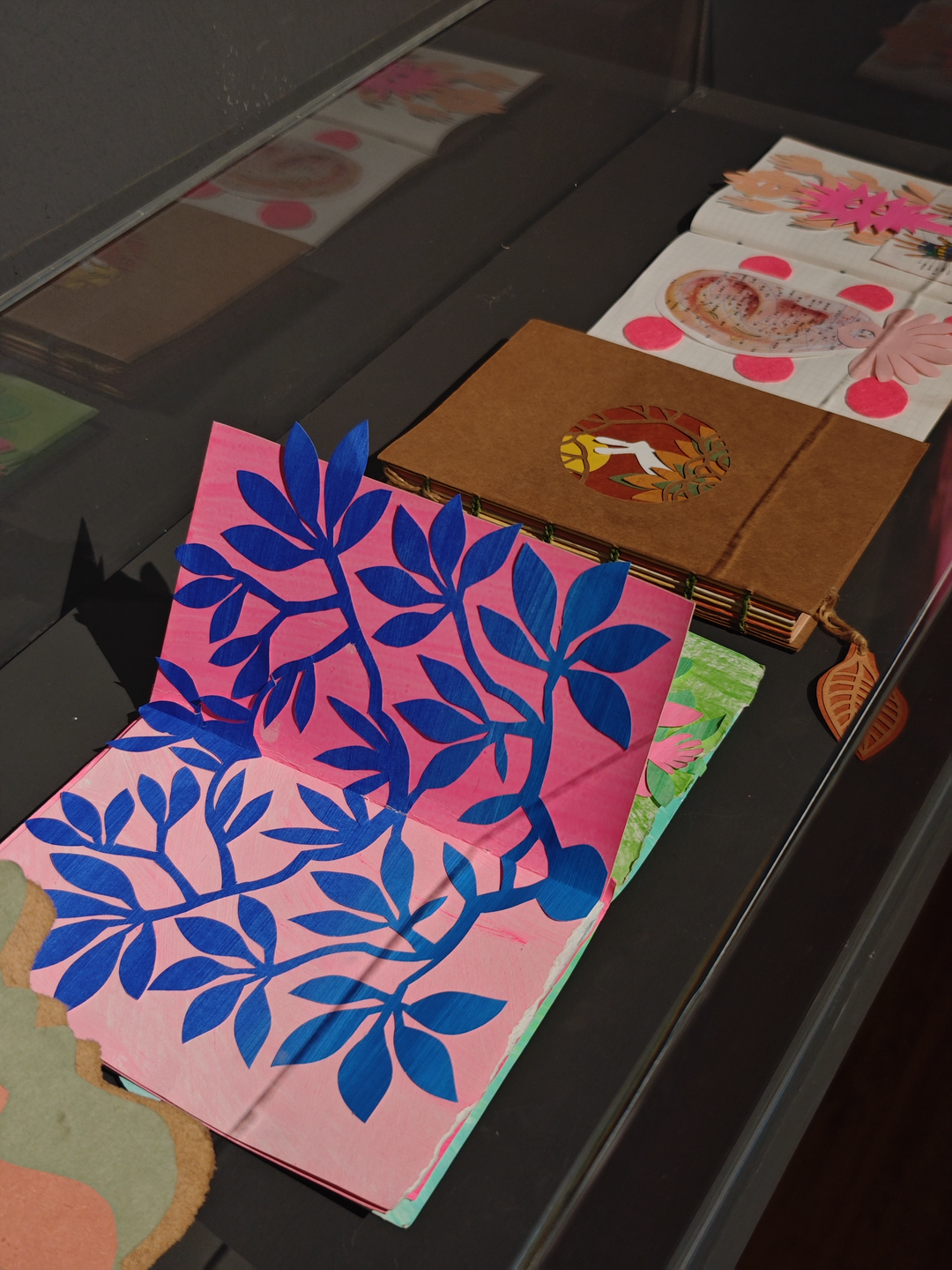
《艺术家书》
The Universe of Paper Cutting – Positive Shapes
The Universe of Paper Cutting – Negative Shapes
Artist’s Books
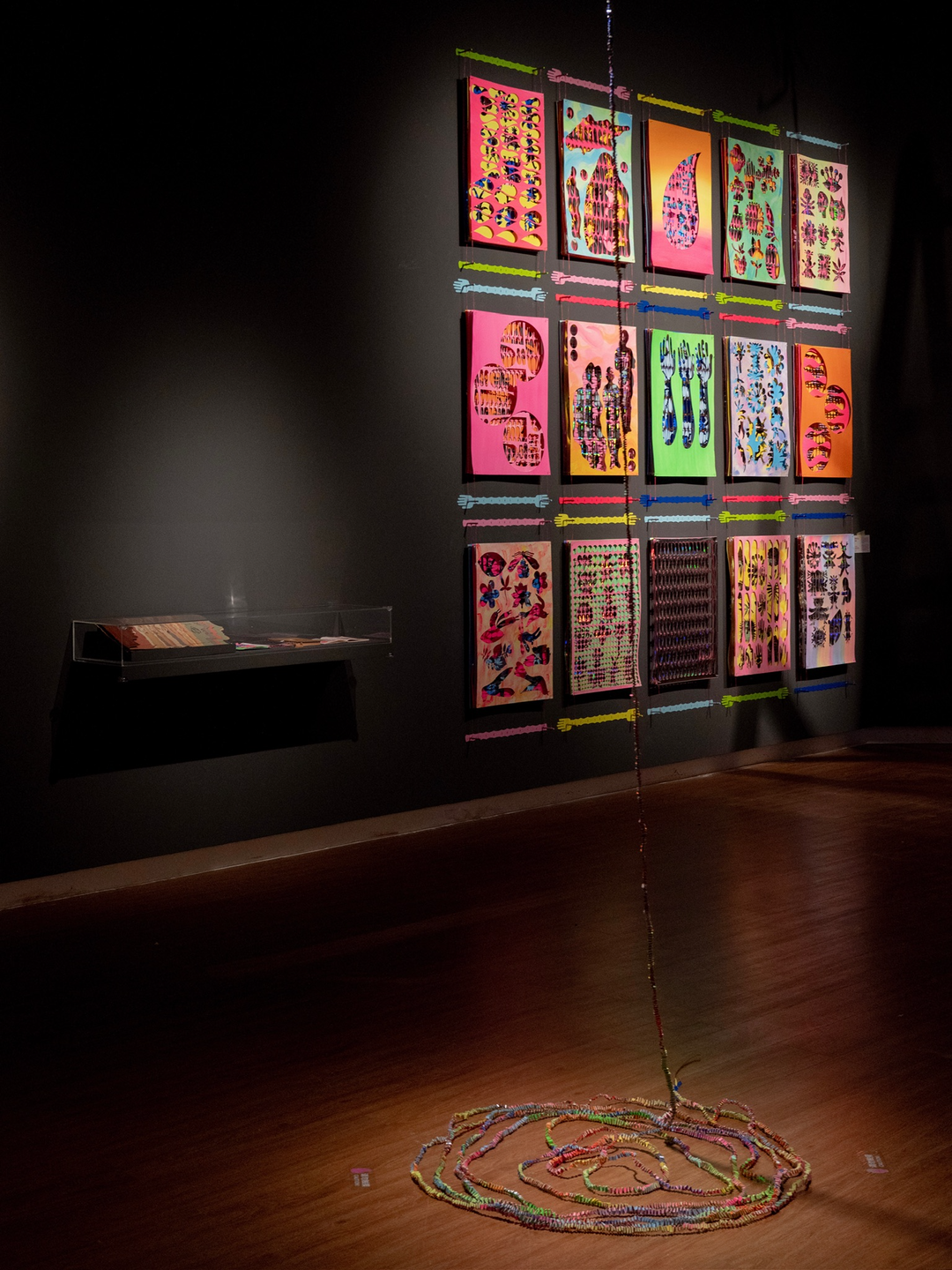
《剪纸宇宙-负形》
多层剪纸拼贴
纸张雕刻、亚克力颜料、金属支架、蜡线、亚克力棒
53 × 76cm
2024-2025
The Universe of Paper Cutting – Negative Shapes
Multi-layer papercutting collage
Laser cutting paper, acrylic paint, metal stand, wax thread, acrylic rods
53 × 76cm
2024-2025
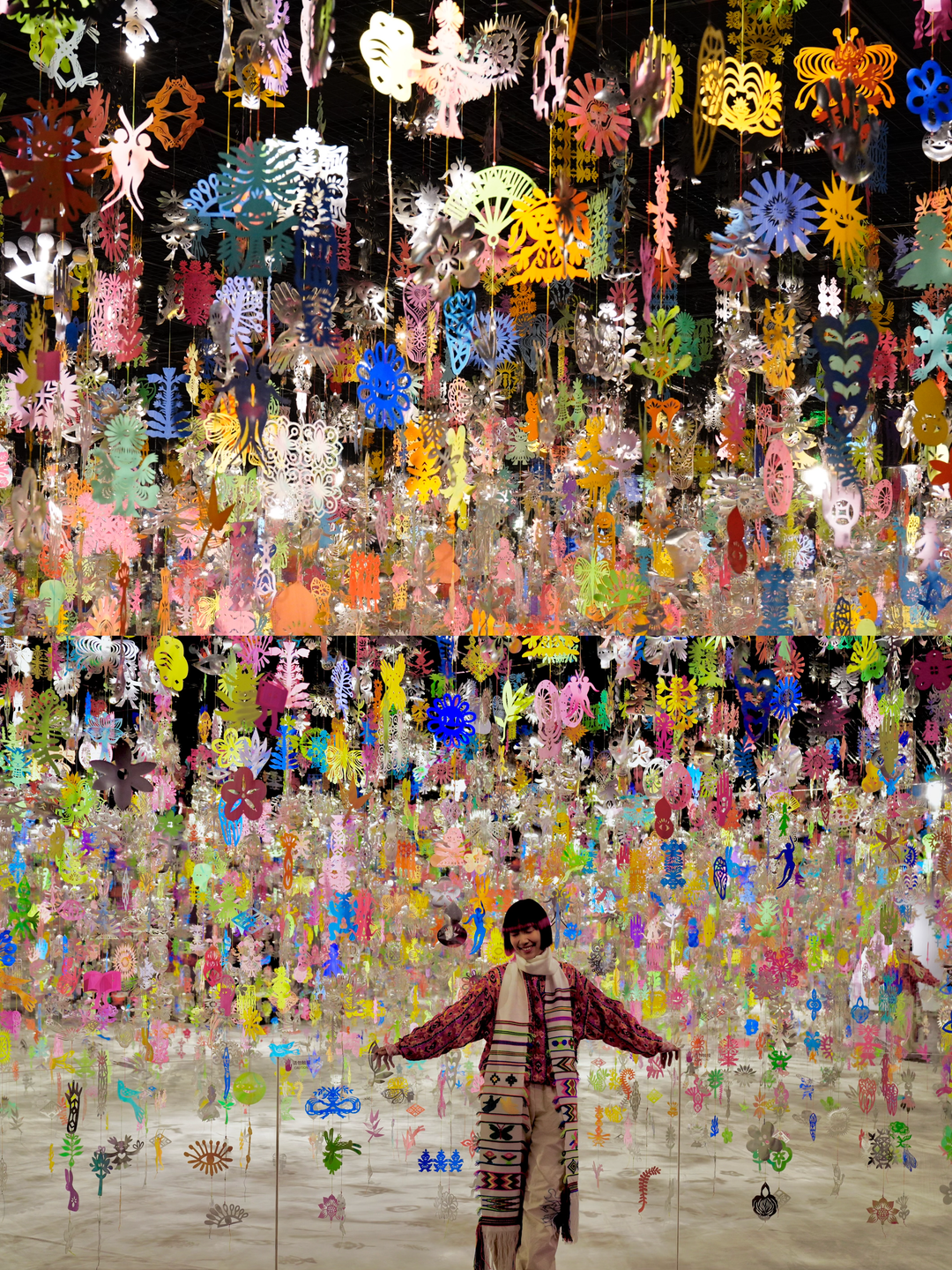
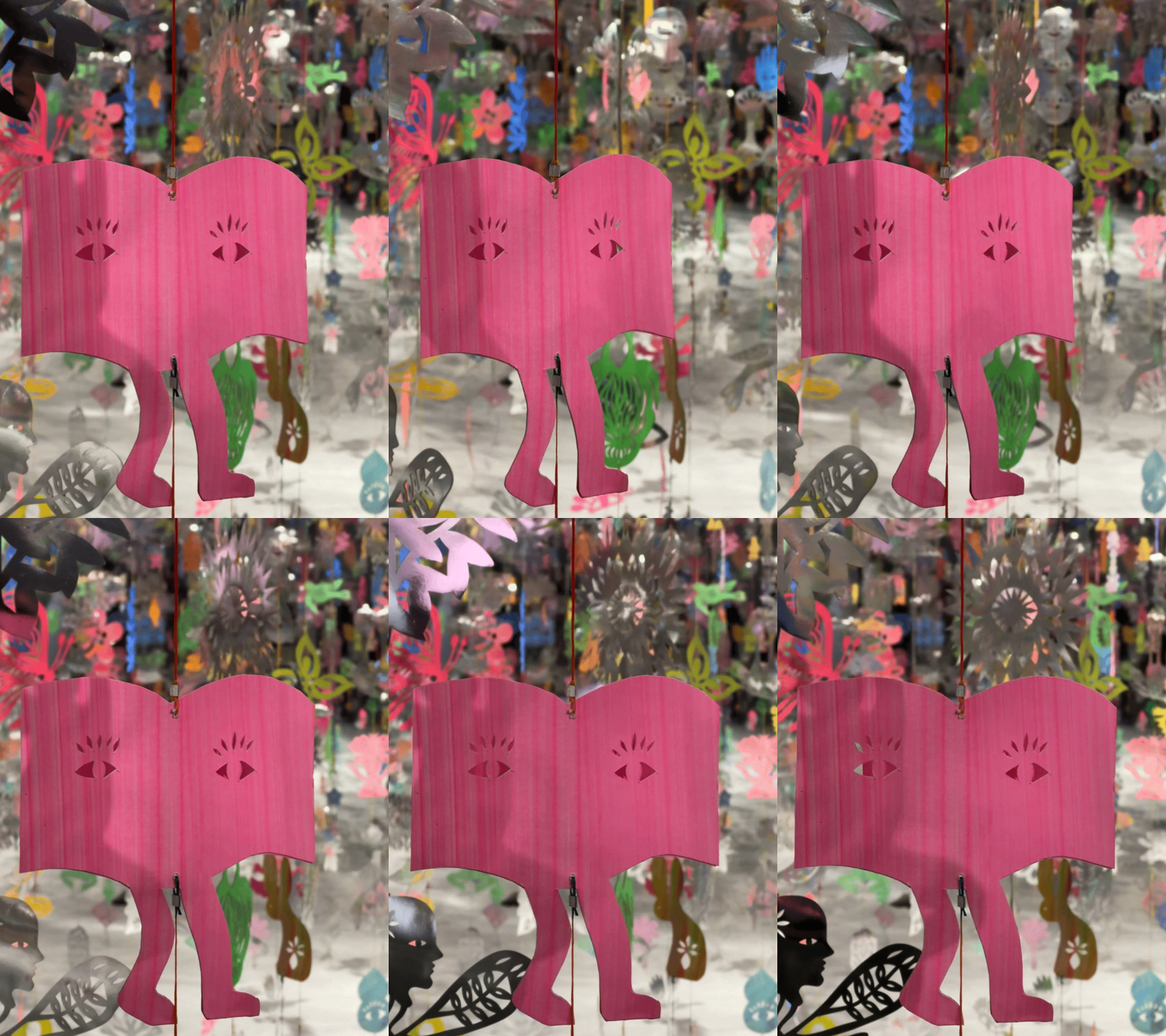
《剪纸宇宙》
装置
纸张雕刻、亚克力颜料、蜡线、电机
尺寸可变
2022—2026
The Universe of Paper Cutting
Installation
Laser cutting paper, acrylic paint, wax thread, micro motors
Dimensions variable
2024-2026
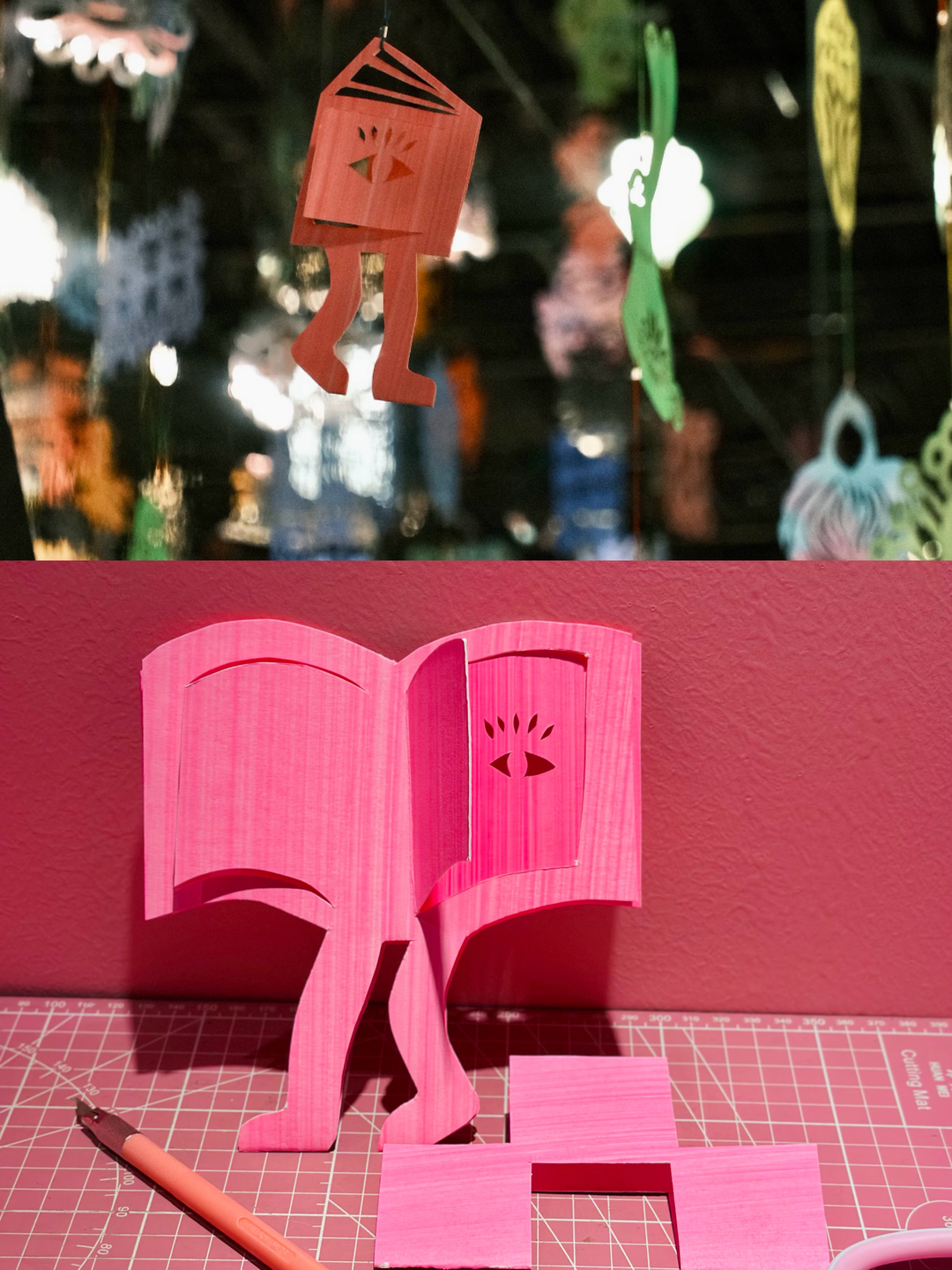
粉丸在展览现场剪出代表“纸页出走”和“诚品”的图形
Fenwan cut patterns represent “the paper that walked out” and the logo of Eslite Spectrum
05 展开
剪刻工序完成后,将对折的纸张展开,预想中的完整图形便清晰显现。“展开”在这一篇章中,指代的不只是纸张维度的状态变化。当折叠的图形被铺展,在空间中获得全然舒展,这种从局促走向舒阔的过程,既呼应着艺术家观念的无声表达,也承载着身体感知在材料中的延伸。
剪纸创作可被视作一种全身心投入的“劳作”。身体并非执行指令的客体,而是主动构建世界的知觉结构。从呼吸的起伏、目光的聚焦到躯干的支撑,身体作为一个整体,参与到与纸张的博弈之中。这种全神贯注的创作,让主体与世界通过材料建立深刻联结;刀尖划过的阻力与纸张翻动的质感,皆转化为身体经验的一部分。与此同时,陈粉丸将情绪视作创作的养料,借由作品表达本能的冲动与感受,并尝试将高度个性化的经验,提炼为能够引发集体共鸣的情绪。
因此,这一篇章的“展开”,同样象征着观念的释放、身体的舒展与自我的打开。从向内聚拢、精细入微的剪刻劳作,转向向外生发、开阔包容的呈现状态,纸张的伸展与艺术家对自我的觉察与探索在此达成共振。它搭建起从私人历史通往公共场域的桥梁,让纸张从一种静止的媒介,转化为一个充满生命力、兼具包裹感的叙事空间。
05 Unfolding
When the folded sheet is opened, the cut-paper form comes clearly into view. In this chapter, “unfolding” refers to more than a change in the paper’s physical state. When the compressed form is spread out and allowed to fully extend in space, the movement from constraint to openness echoes the quiet articulation of the artist’s ideas, while also carrying the extension of bodily perception into material form.
Papercutting can be understood as a form of fully embodied labor. The body is not a passive executor of instruction, but an active structure through which the world is perceived and constructed. From the rhythm of breathing and the focus of the gaze to the support of the torso, the body as a whole participates in a negotiation with the paper. This concentrated act of making allows the subject to forge a profound connection with the world through material. The resistance felt at the blade’s edge and the texture of the turning sheet become part of lived bodily experience. At the same time, Chen Fenwan treats emotion as creative fuel, expressing instinctive impulses and sensations through her work, and seeking to distill highly personal experiences into affects capable of collective resonance.
Thus, “unfolding” in the section also symbolizes the reveal of ideas, the extension of the body, and the opening of the mind. Moving from the inward, meticulous labor of cutting toward an outward, expansive mode of presentation, the stretching of paper resonates with the artist’s ongoing self-awareness and exploration. It constructs a bridge from private history to the public sphere, transforming paper from a static medium into a vital narrative space—one that both contains and envelops.
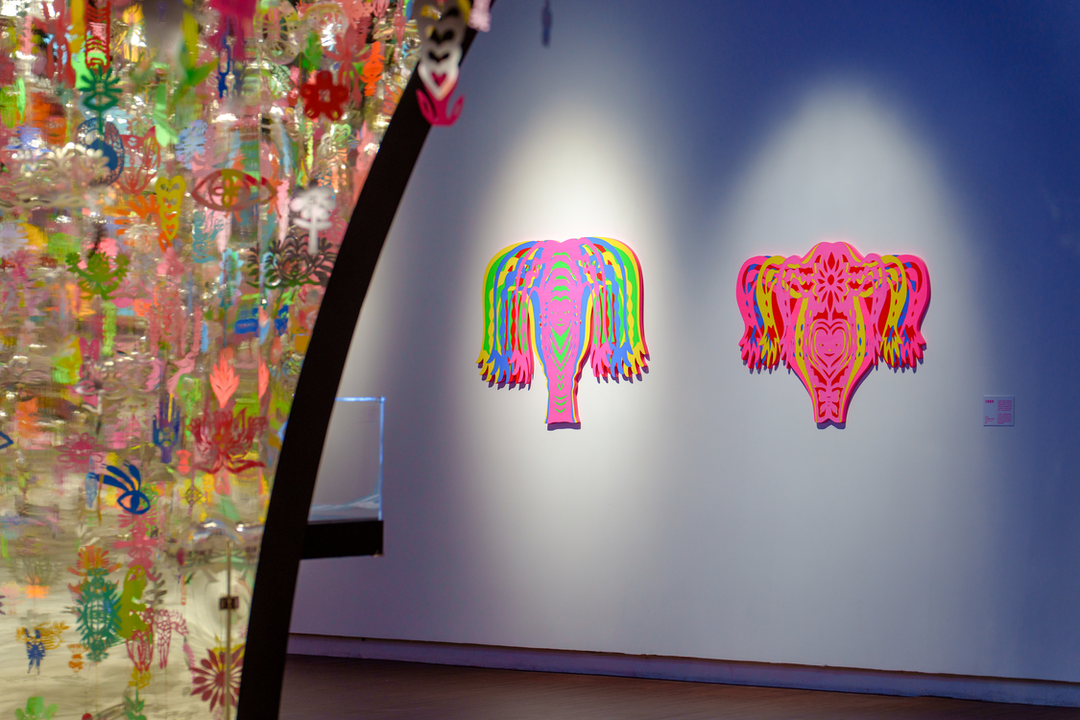
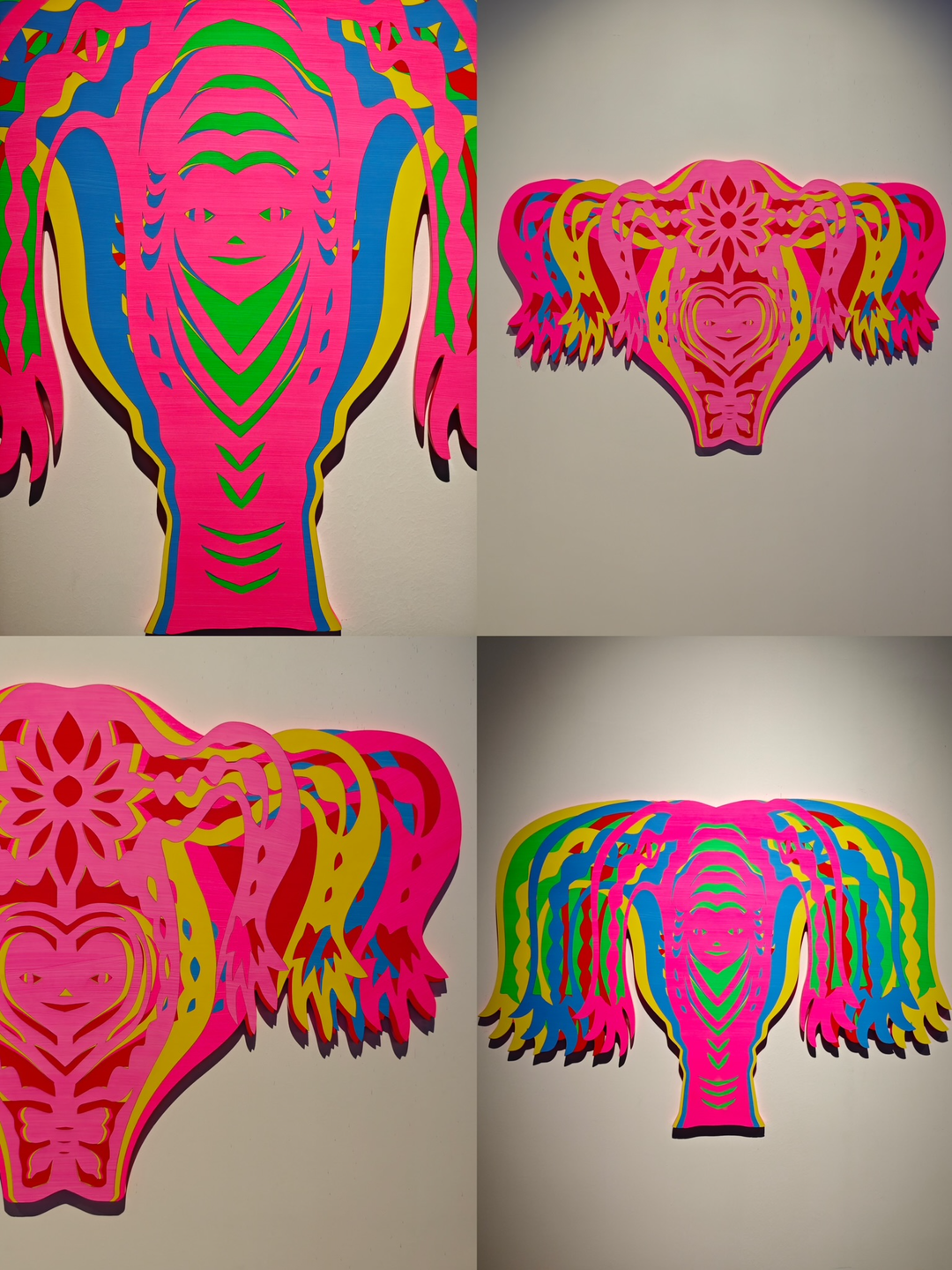
《子宫系列》
Uterus Series, 2025
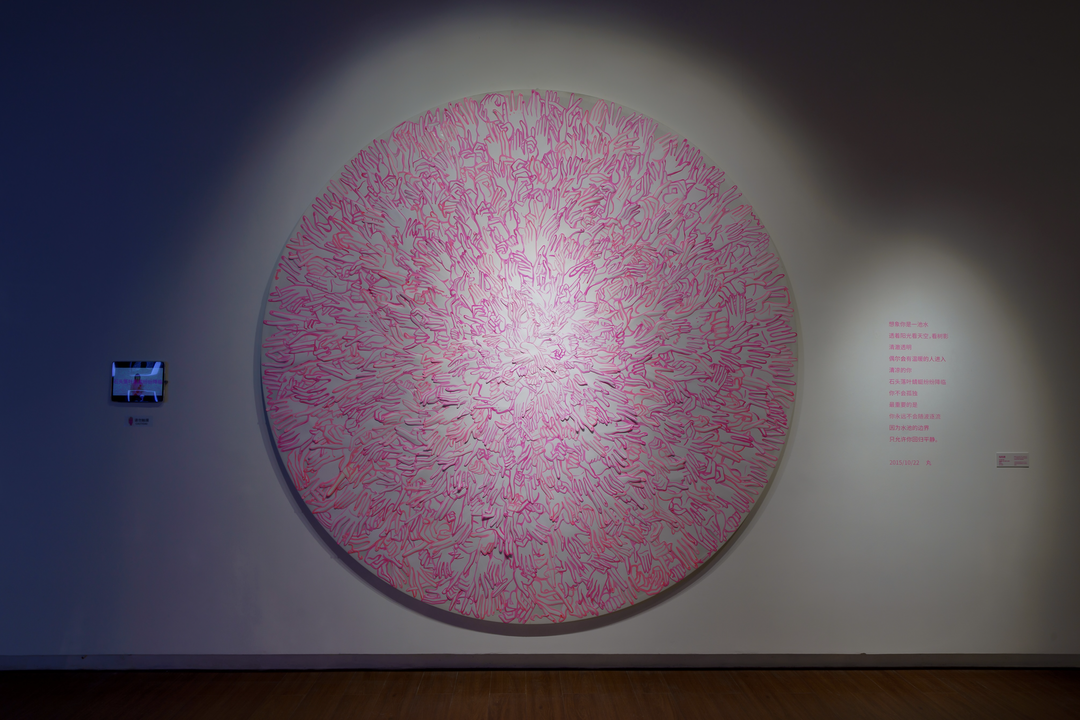
《乌托邦》
Utopia, 2017-2023
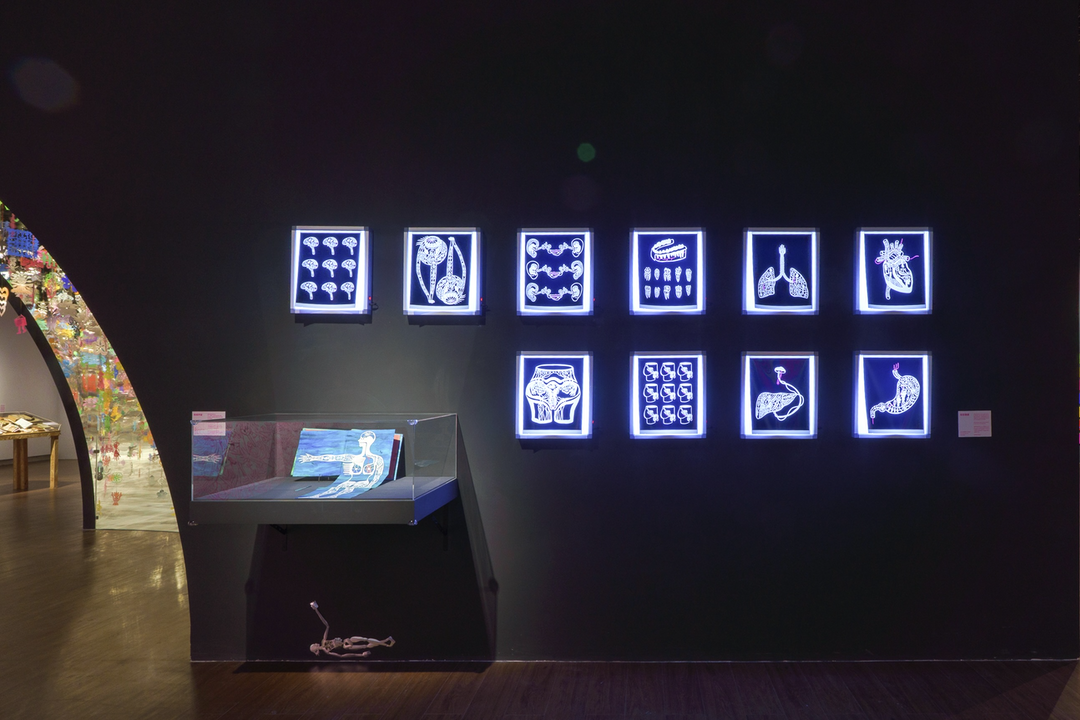
《祝您健康》
May Good Health Be with You, 2015-2013
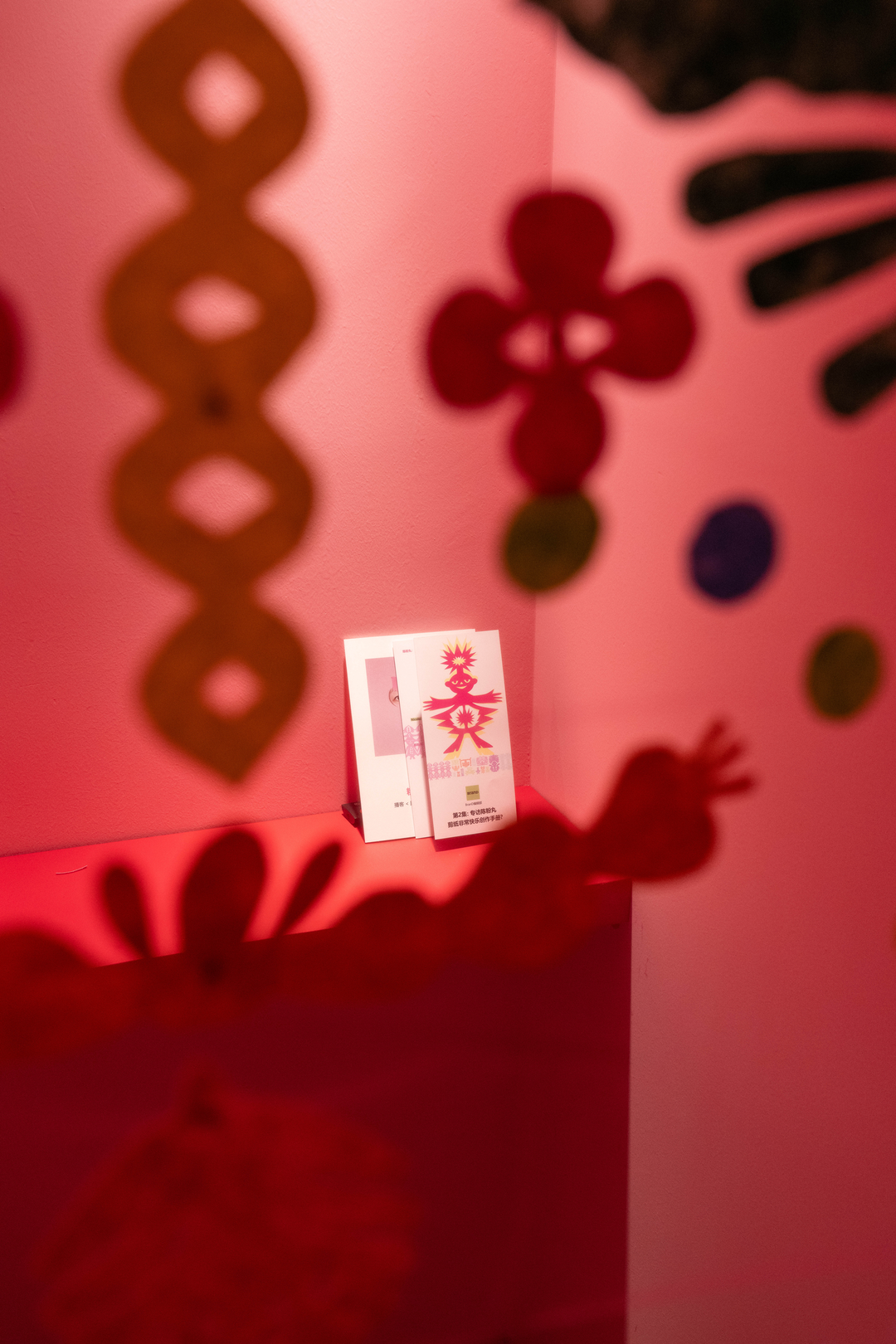
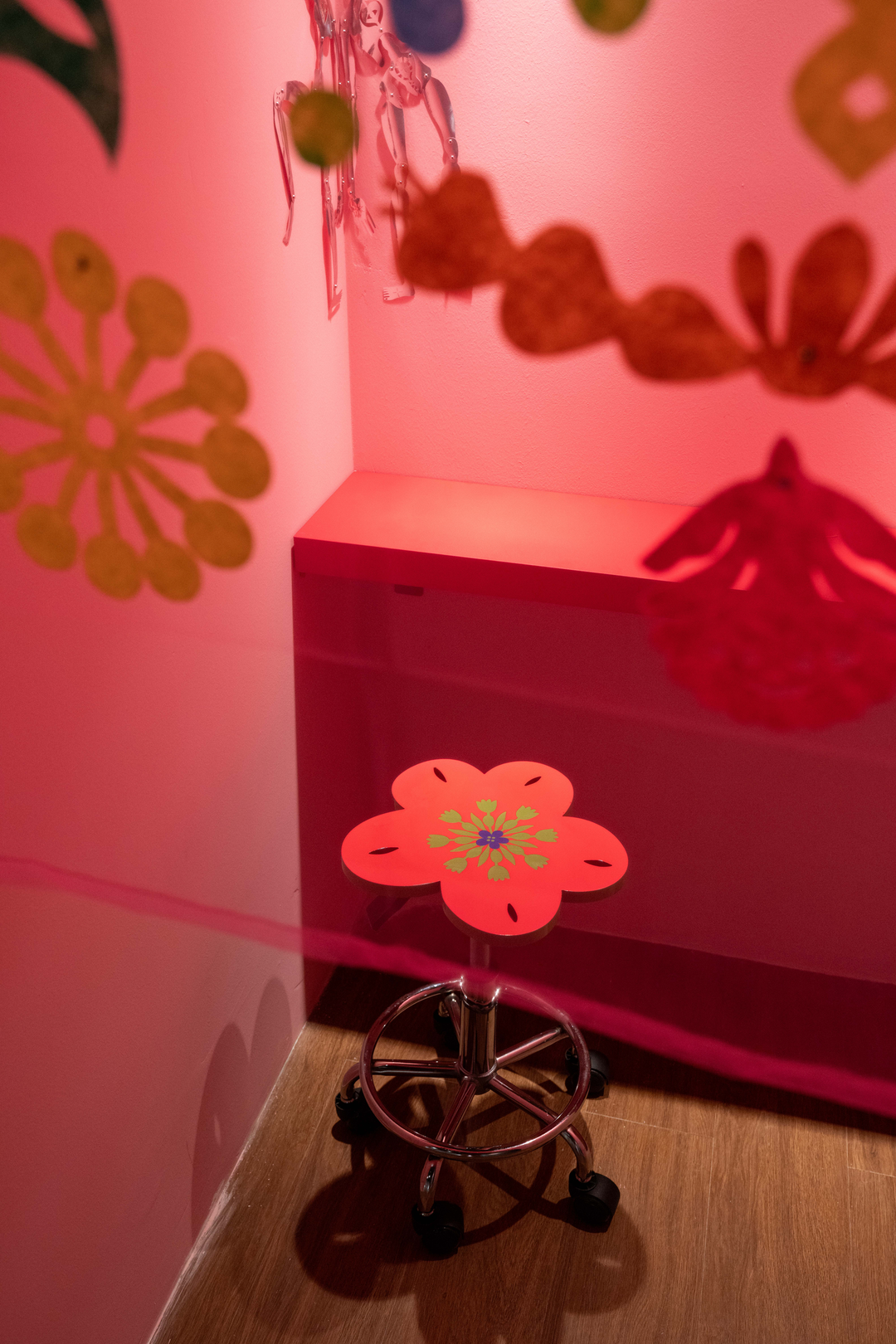
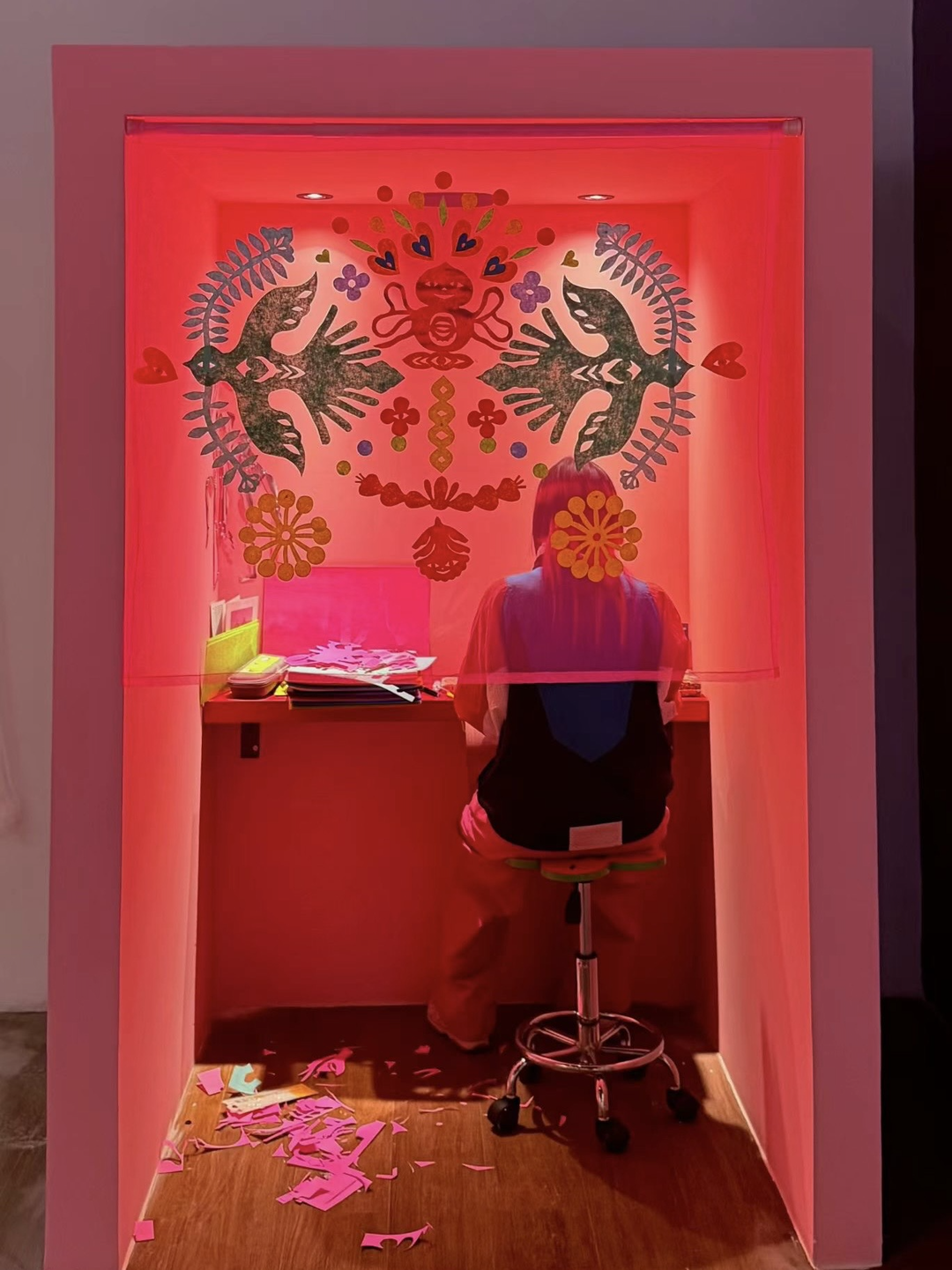
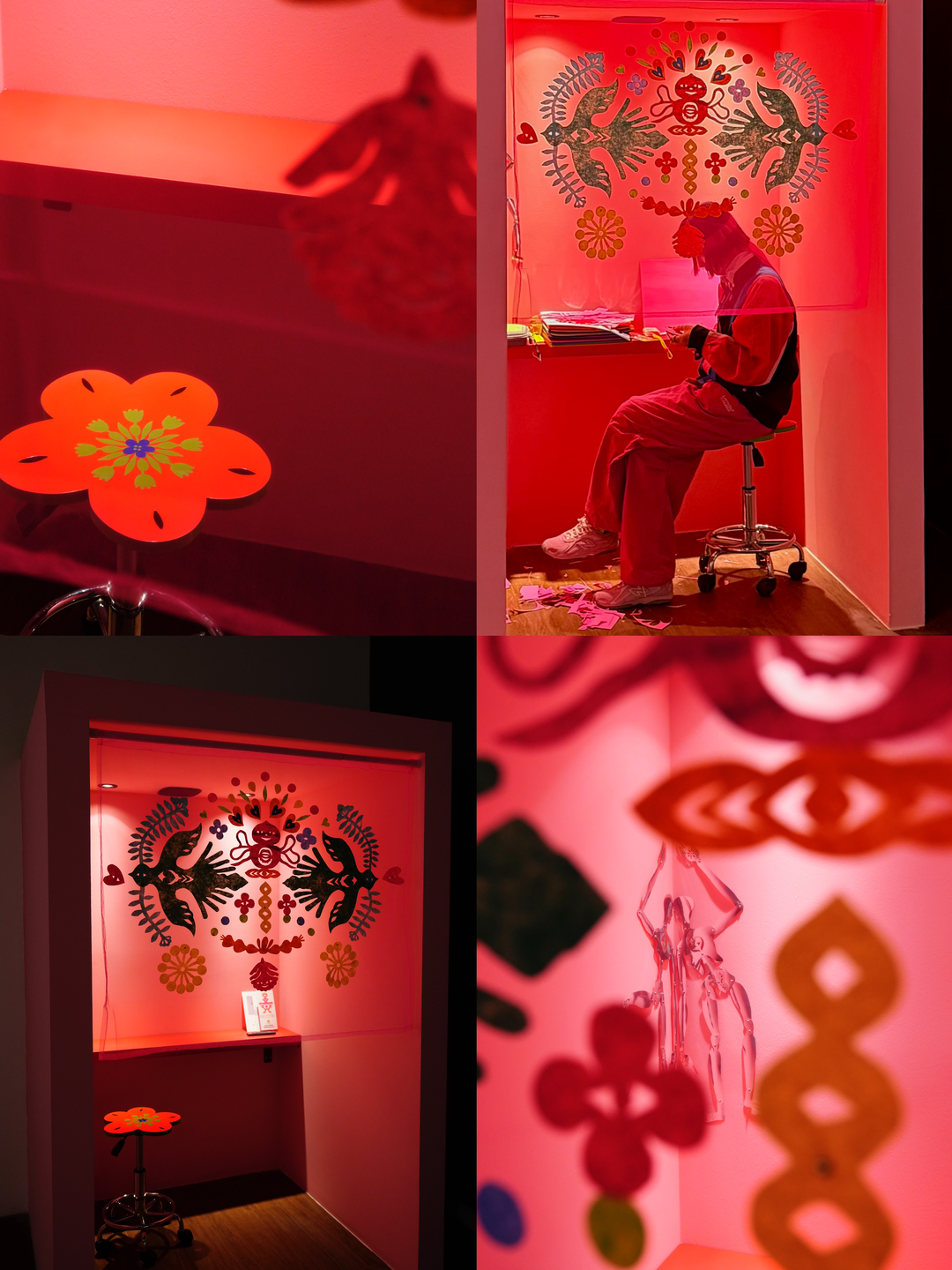
展厅的角落处,搭建了一间“播客厅”,呼应“展开”的主题。粉丸曾两次参与播客录制,分享作品的创作灵感,也讲述创作之外的个人故事。粉色格子间搭配粉丸手作的剪纸门帘,为观众营造出专属的私密感,大家可以静坐聆听播客内容,也能随手翻动、展开桌面特制的对谈文字折页。
In a corner of the space, a small “podcast room” has been set up, echoing the theme of “unfolding.” Fenwan has recorded podcast episodes as a guest twice, sharing the inspirations behind her works as well as personal stories beyond her artistic practice. A pink cubicle, paired with a handmade curtain by the artist, creates a sense of intimacy for visitors. Here, one may sit quietly to listen to the podcast or casually leaf through and unfold printed leaflets placed on the table.
06 拼组
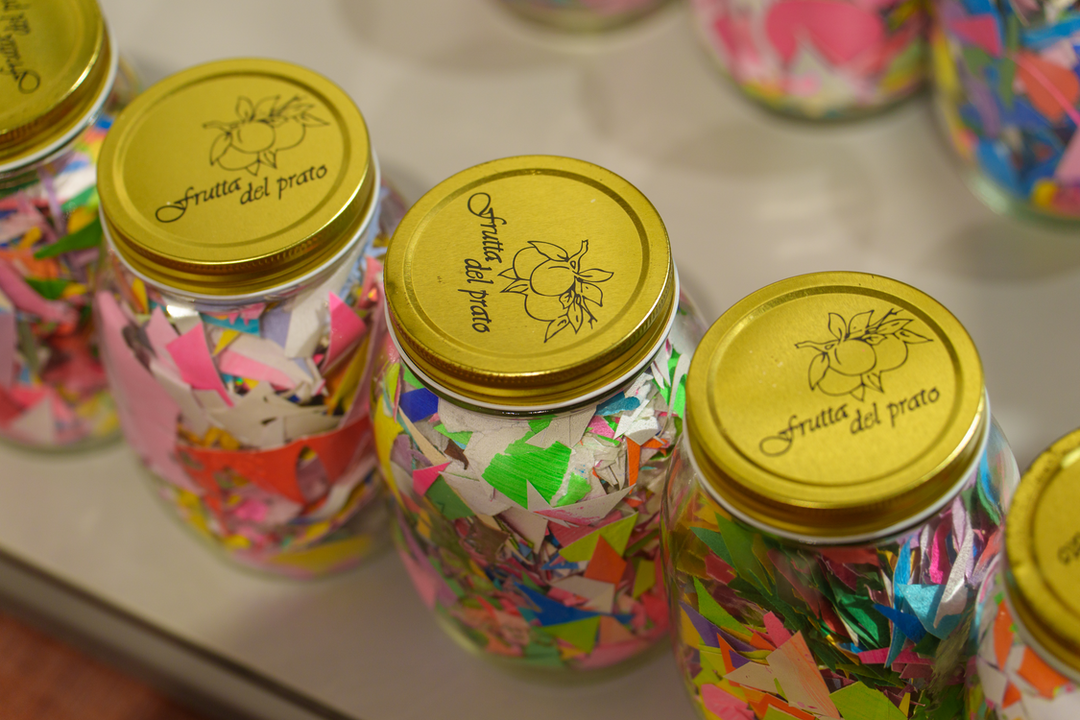
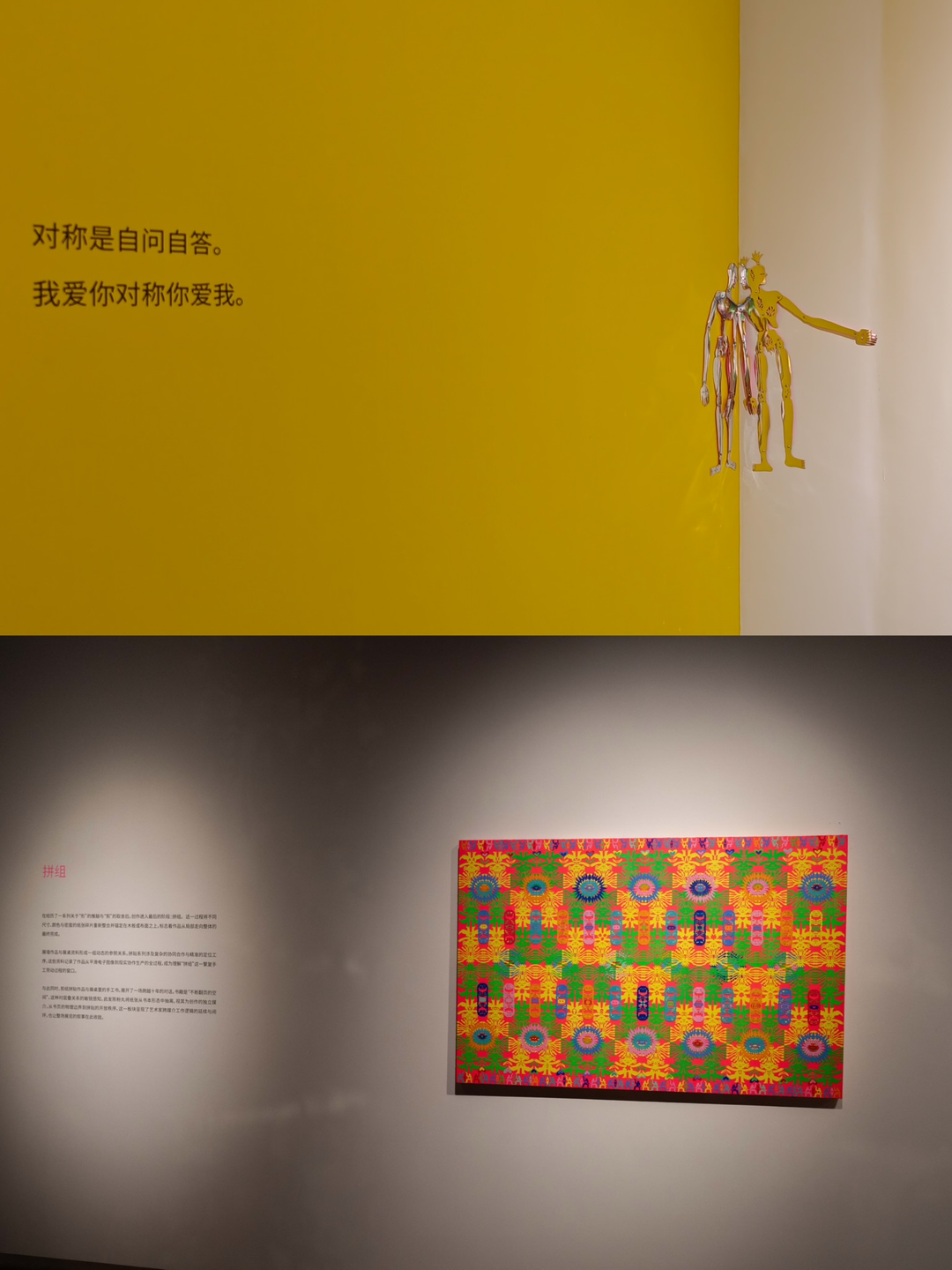
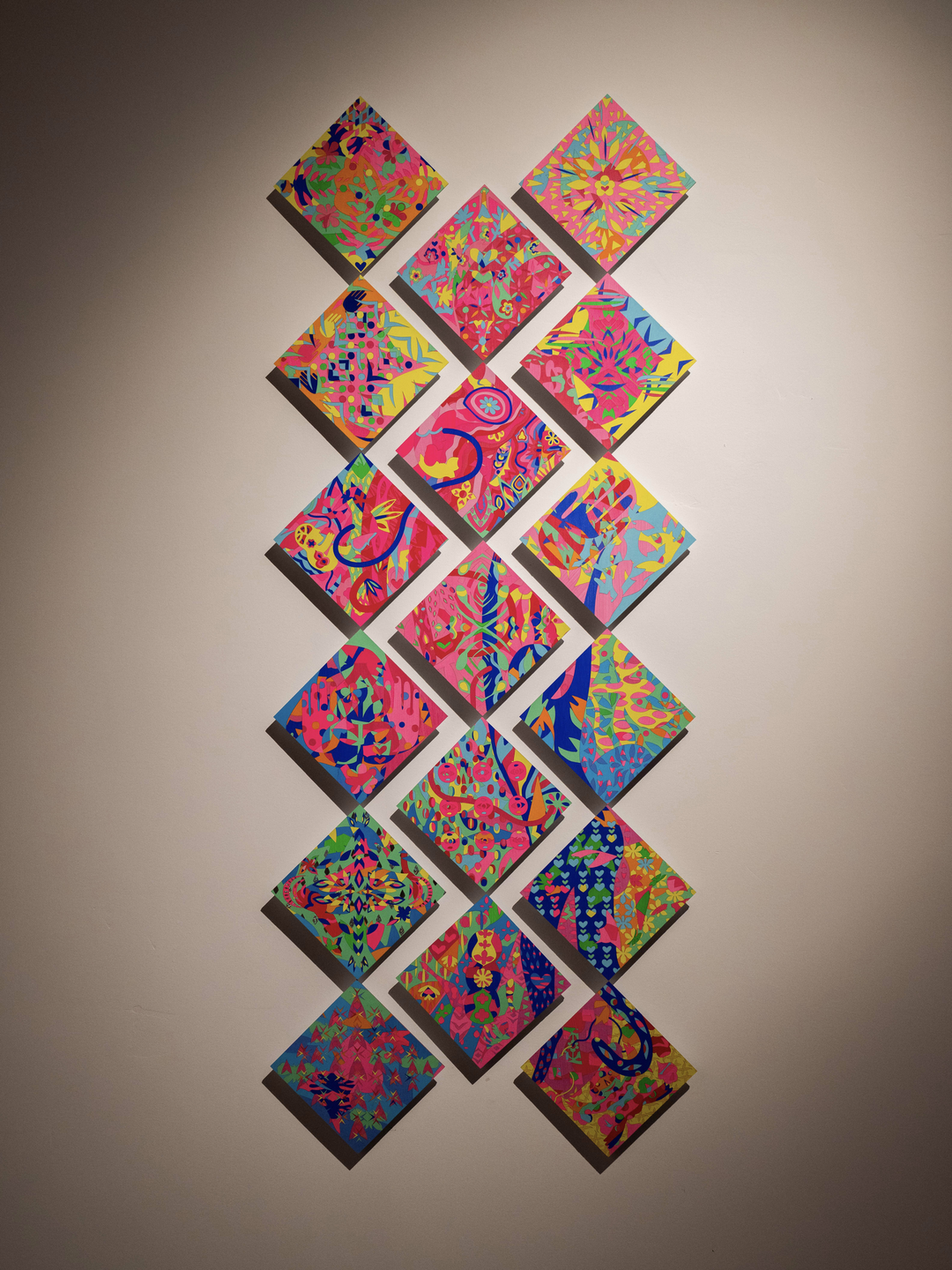
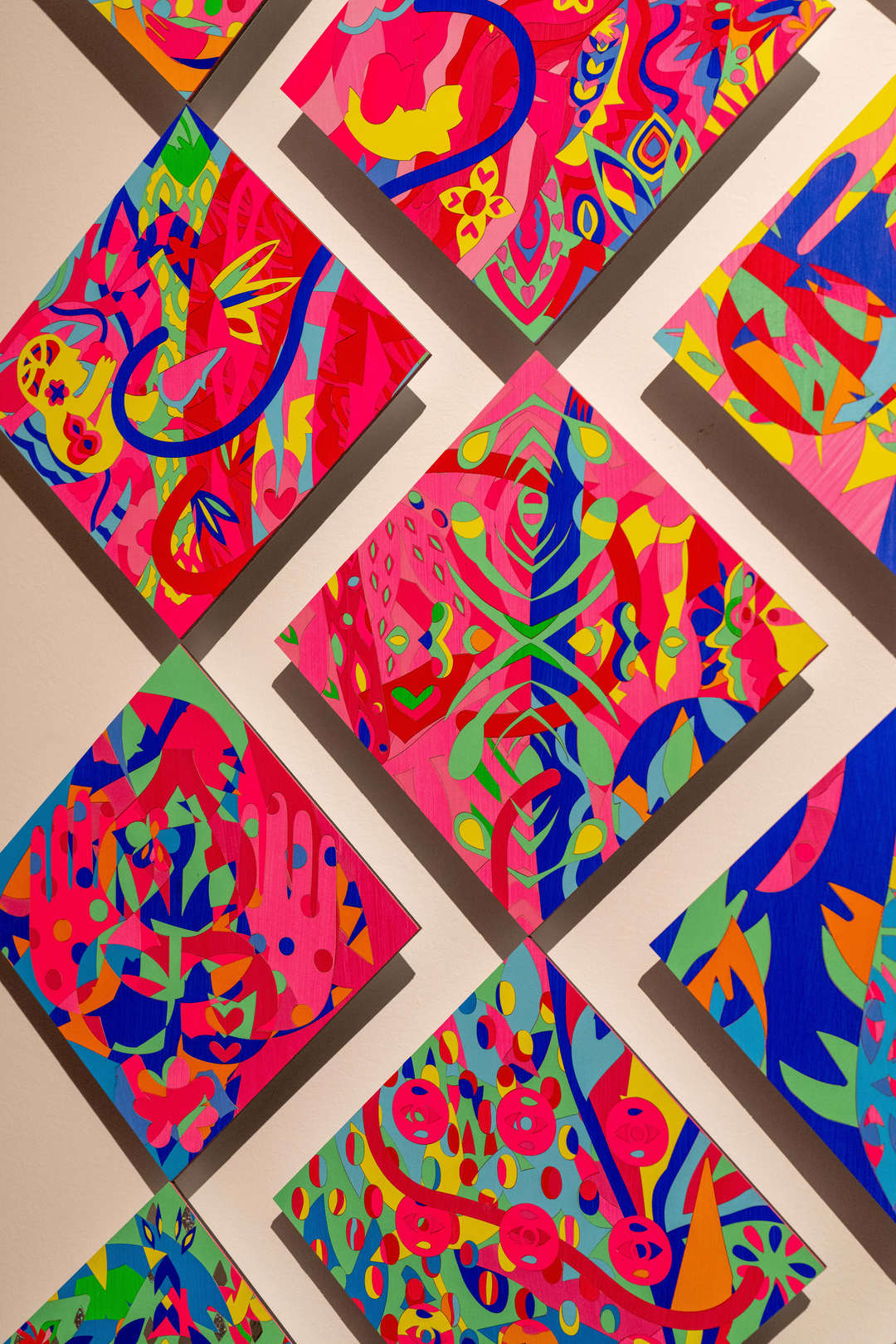
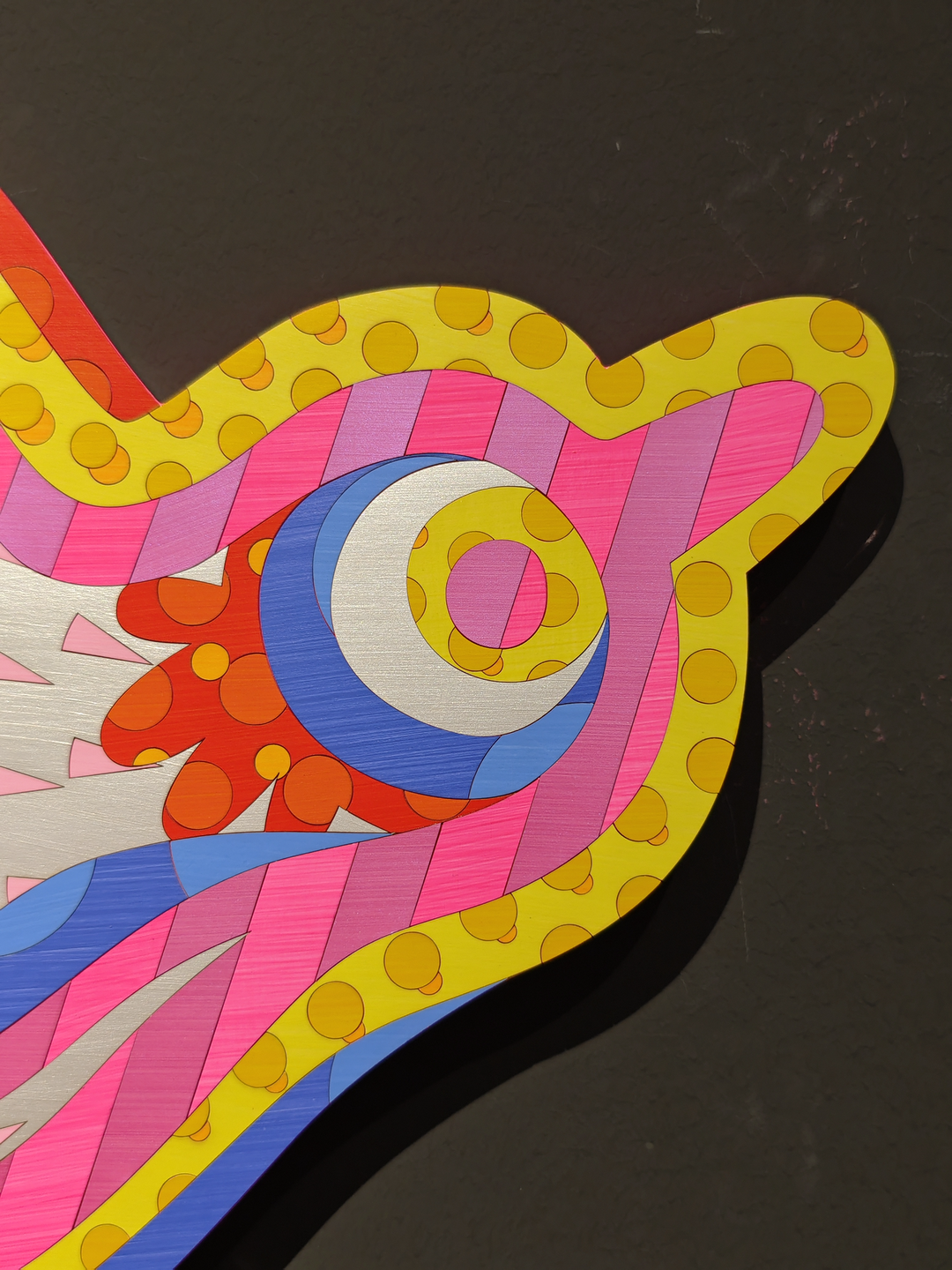
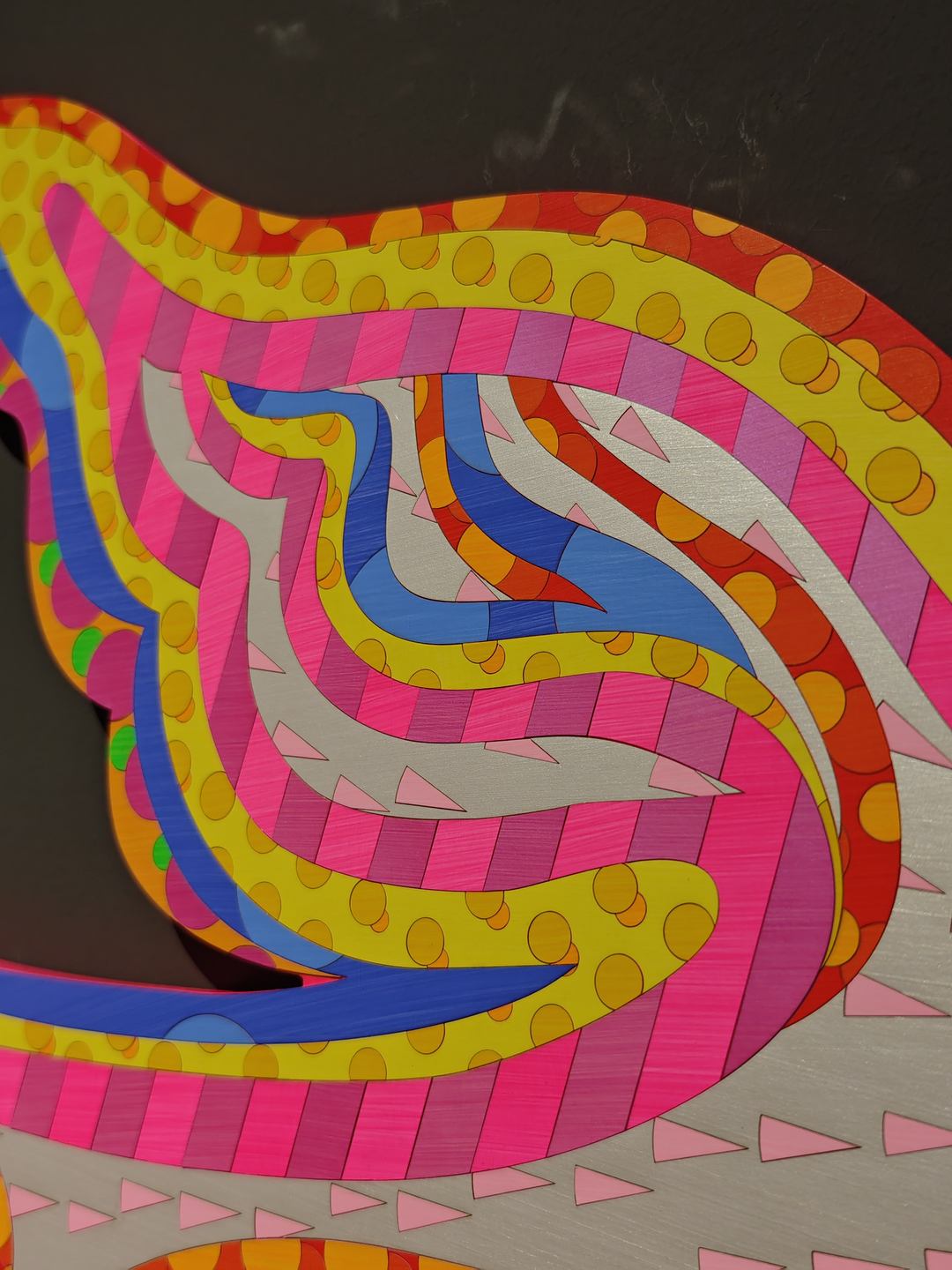
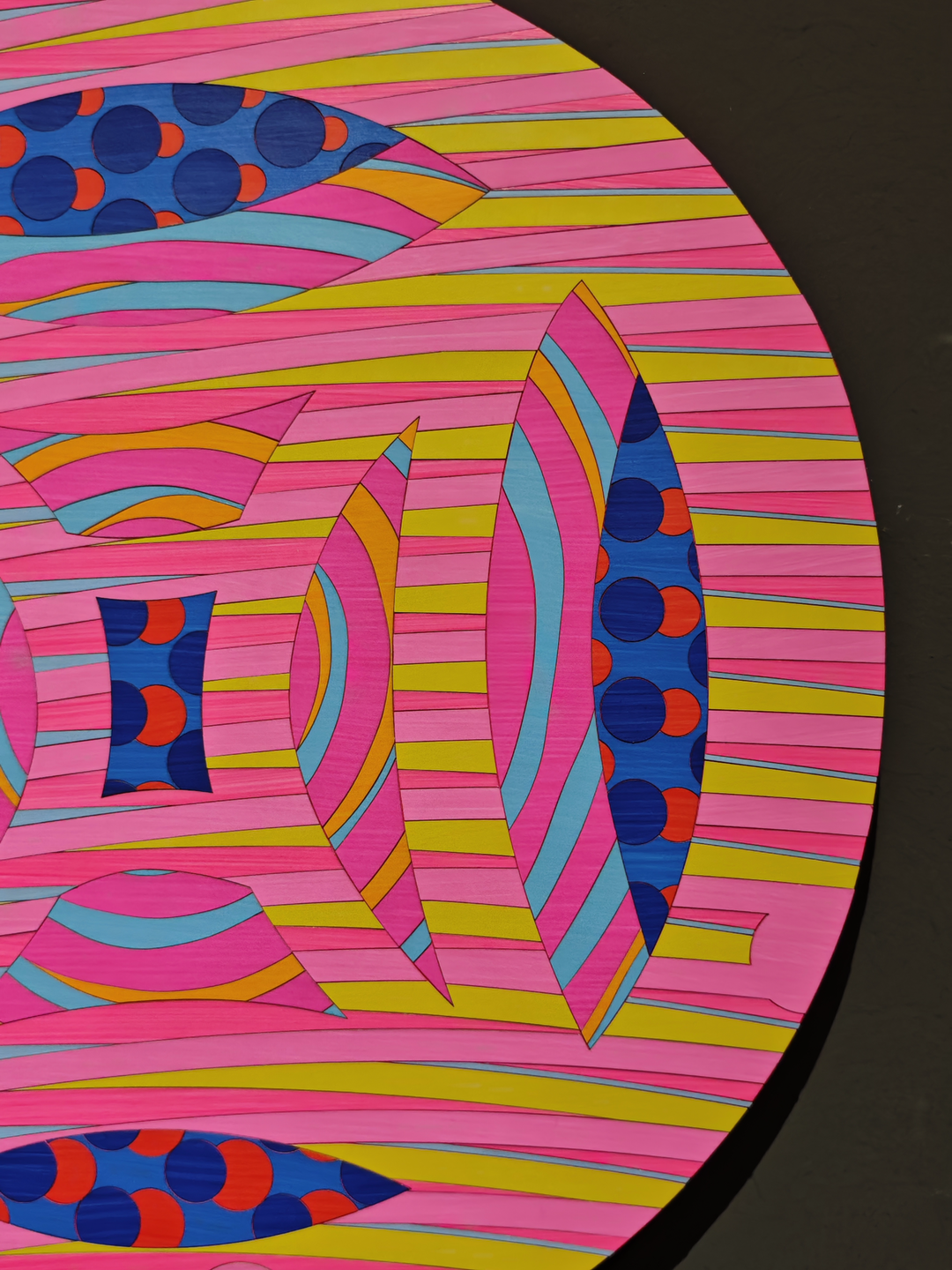
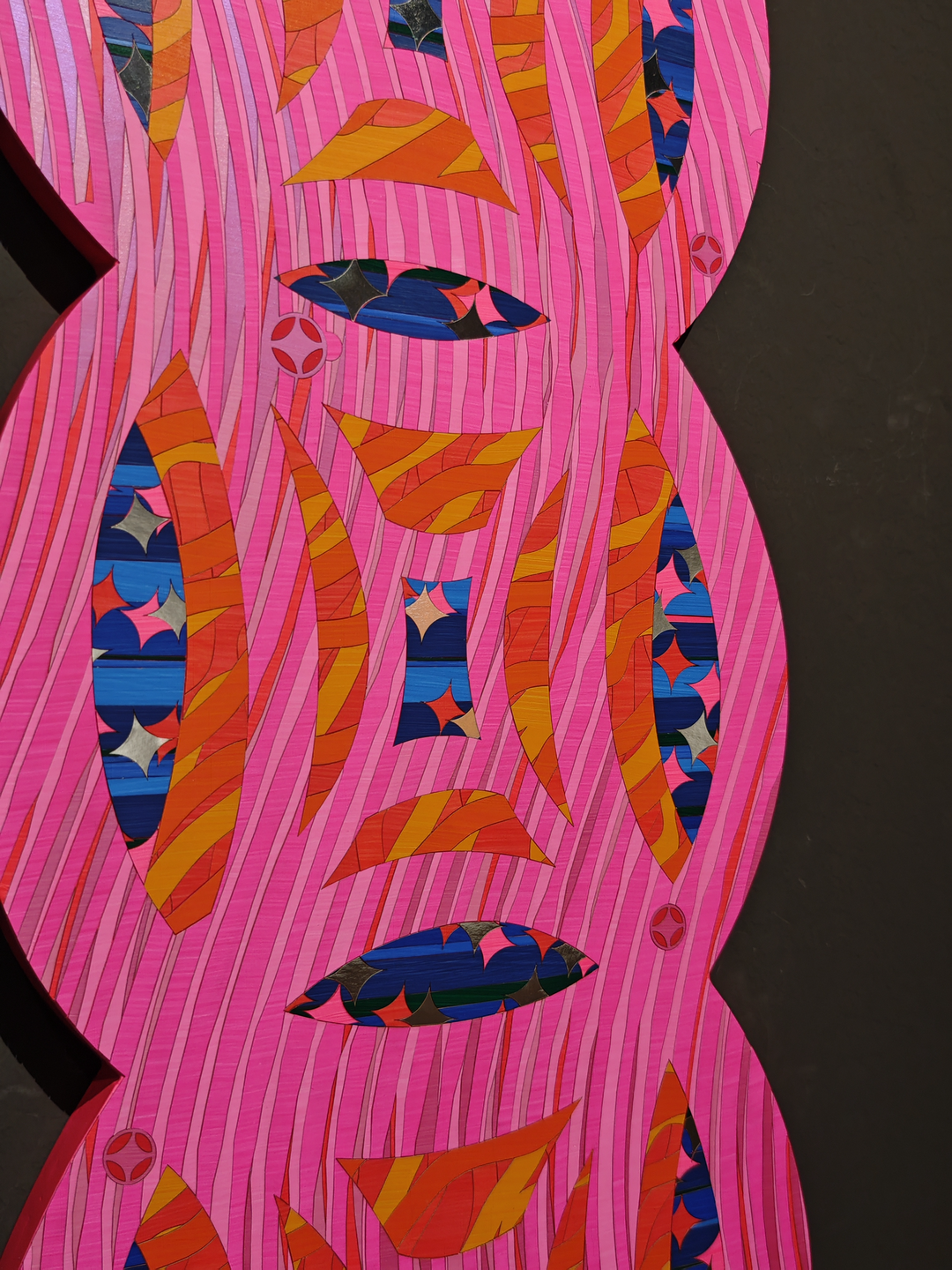
在经历了一系列关于“形”的推敲与“剪”的取舍后,创作进入最后的阶段:拼组。这一过程将不同尺寸、颜色与密度的纸张碎片重新整合并锚定在木板或布面之上,标志着作品从局部走向整体的最终完成。
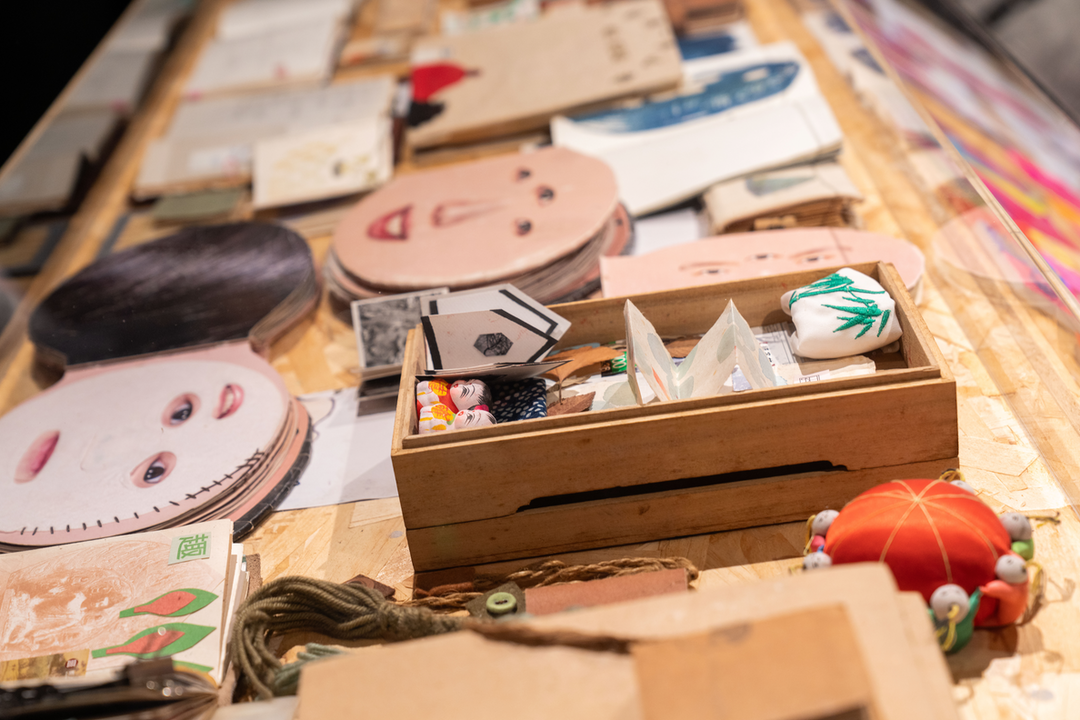
展墙上的《剪纸宇宙拼贴系列》新作品与展桌内的过程资料,构成了一组动态的参照关系。拼贴系列涉及复杂的协同合作与精准的定位工序,这些相关资料,既记录了作品从平滑电子图像到现实协作生产的全过程,也成为理解“拼组”这一繁复手工劳动过程的窗口。
与此同时,剪纸拼贴作品与展桌里的手工书,形成了一次跨越十年的对话。书籍是“不断翻页的空间”,这种对折叠与层叠的敏感感知,启发陈粉丸尝试以纸为媒介构建更广阔维度的艺术可能。在将纸张从书本形态中抽离、视其为独立创作载体的过程中,她与剪纸相遇,并逐步确立了如今独树一帜的个人风格语言。
从书页的物理边界到拼贴的开放秩序,这一板块不仅展示了作品的最终面貌,更呈现了艺术家跨媒介工作逻辑的延续与闭环。拼组阶段的秩序建构,也让整场展览的叙事在此收拢。
06 Collaging & Reassembling
After a series of deliberations over “shapes” and decisions of subtraction in “cutting,” the creative process enters its final stage: collaging and assembling. Paper fragments of varying sizes, colors, and densities are recomposed and anchored onto wooden panels or canvas, marking the work’s transition from part to whole.
New works from The Universe of Paper Cutting Collage Series displayed on the walls enter into a dynamic dialogue with process materials presented in the display caves. The collage series involves complex collaboration and precise positioning; these archival materials document the full trajectory from smooth digital images to collective physical production, offering insight into the intricate labor behind assembly.
At the same time, the papercut collages converse with the artists’ books presented in the caves—a dialogue spanning a decade. Books are “spaces of continuous turning,” and the sensitivity to folding and layering inspired Chen Fenwan to explore paper as a medium capable of broader spatial dimensions. In the process of extracting paper from the book's bound structure and treating it as an independent art medium, she encountered papercutting. She gradually established the distinctive visual language that defines her practice today.
From the physical boundaries of the page to the open order of collage, the section not only presents the final appearance of the works but also reveals the continuity and closure of the artist’s cross-media methodology. The structuring of order in the collaging and assembling stage draws the narrative arc of the exhibition to a composed and coherent conclusion.
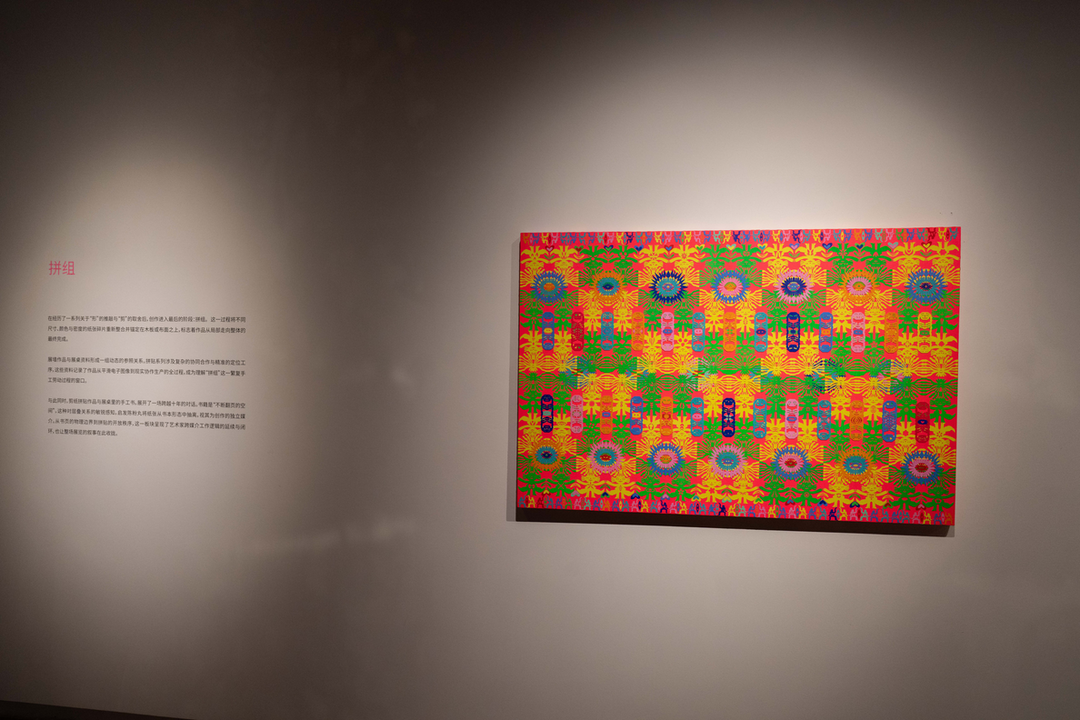
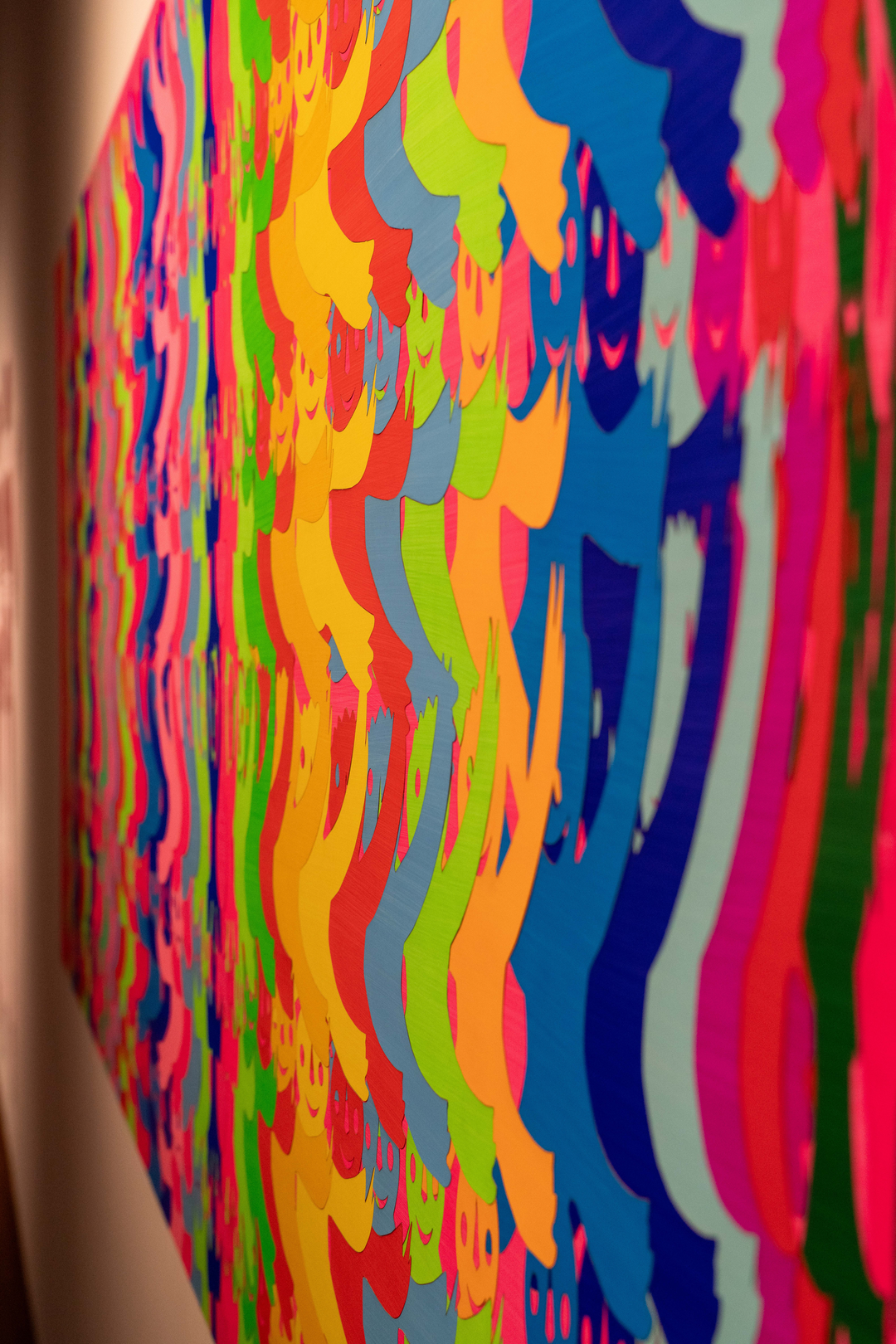
《剪纸宇宙拼贴系列-1》
架上剪贴
木板、纸张雕刻、亚克力颜料
150 x 100厘米
2024
The Universe of Paper Cutting Collage Series–1
Collage on panel
Wood panel, laser paper cutting, acrylic paint
150 × 100cm
2024
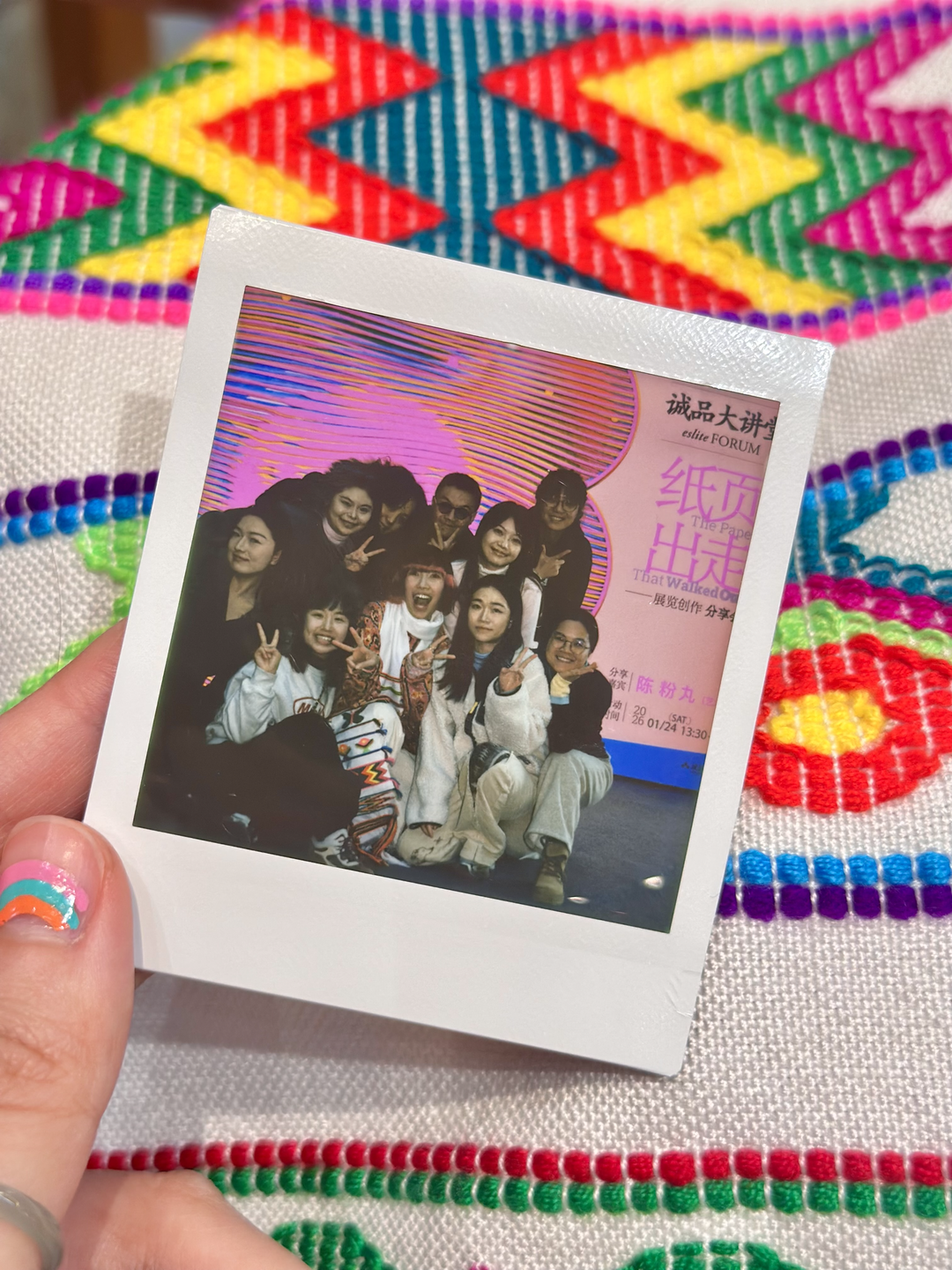
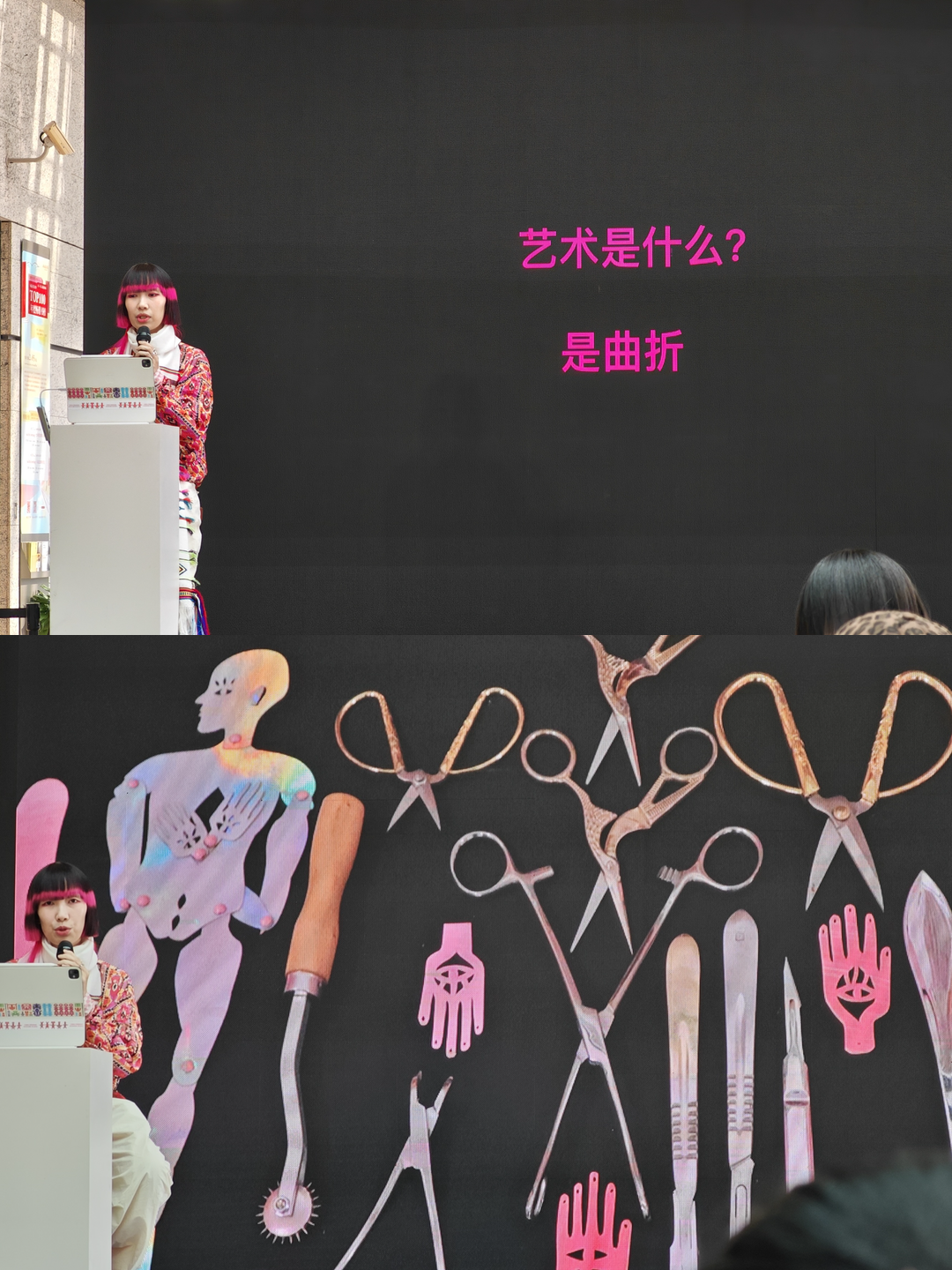
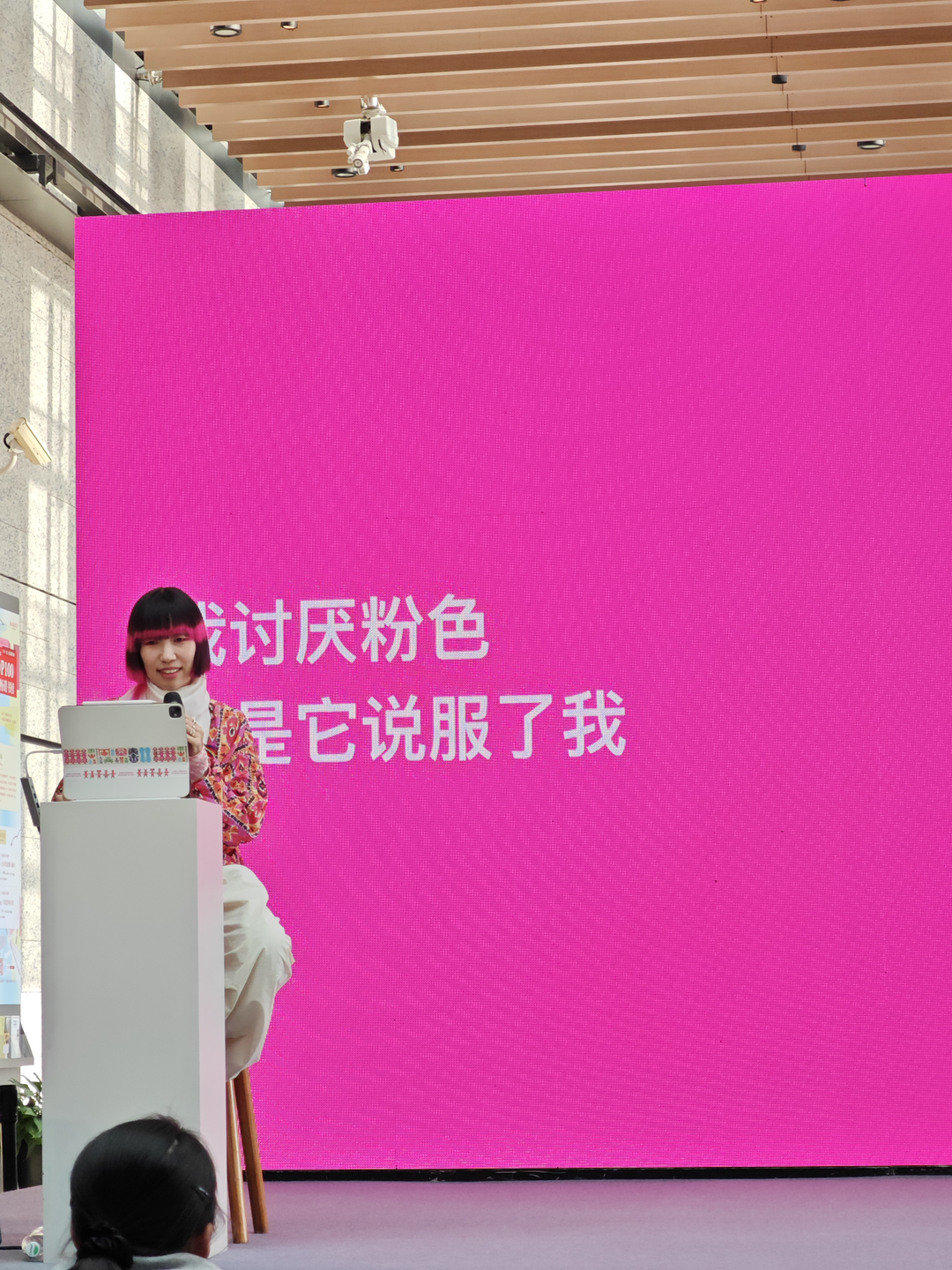
「诚品大讲堂“纸页出走”展览创作分享会」
分享嘉宾:陈粉丸
感谢各位观众的到来与聆听,丸丸敬礼
eslite Forum: Artist Talk - The Paper That Walked Out
Speaker: Chen Fenwan
Thank you all for being here and listening, SALUTE!
“从书页出走的我,这次有机会重新梳理自己,很珍惜。”
“Having walked out from the pages, I’ve had the chance to reorganize myself this time. I truly cherish it.”
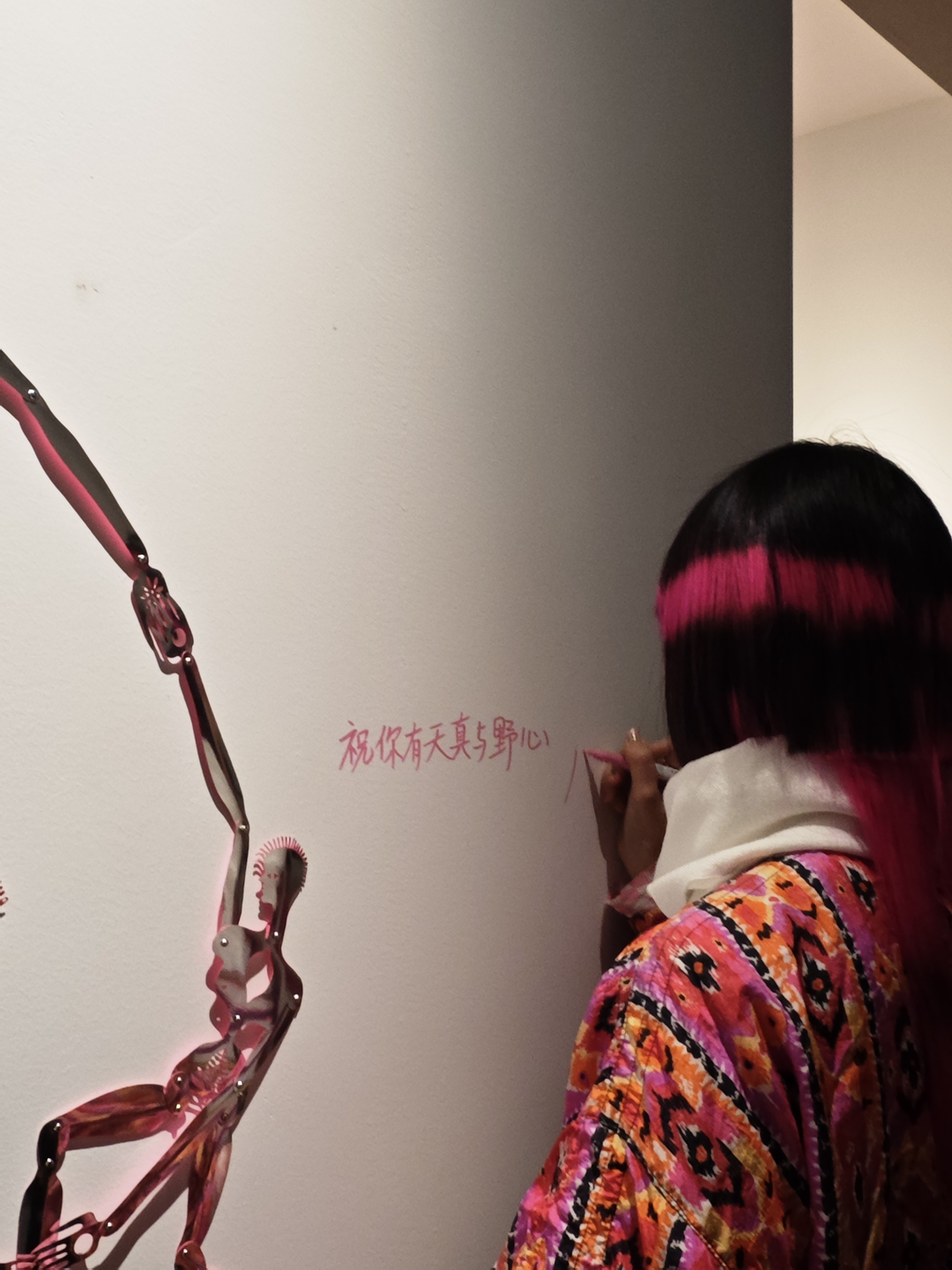
* 仲 有 花 絮 *
hidden scenes and bloopers